
The spread of roach in Ireland (pt. 1)
No other fish species has spread as quickly nor caused such profound ecological changes in Irish freshwaters than the seemingly innocuous roach. In this first of two articles, we look at the available evidence of how this now very common coarse fish came to be in so many of our waterways in such a short space of time.
Issue 24 (Sep-Oct 2018) Bill Brazier


Ireland has a somewhat limited number of freshwater fish species compared to Britain and mainland Europe, a direct result of our island being largely separated (or at least not easily accessible) from the rest of the continent due to rising sea levels following the end of last Ice Age. Whilst there is considerable debate and conjecture surrounding whether certain animal and plant species are or aren’t native to Ireland – especially given modern genetic revelations – there are some colonisation histories we are fairly certain of. A prime example is that of the roach (Rutilus rutilus).
The first documented introduction of roach in Ireland occurred in 1889 on Munster’s River Blackwater. A regular visiting English angler, Mr. J.C. Truss, made a trip to the Lismore area to target pike, which he subsequently caught to 25lb. With him (via rail) he brought two tins of live roach and dace for use as bait. These tins were tied to a wall near the river and allegedly swept away by a flood, with the empty containers found the following summer a mile downstream. Whilst there is some evidence that dace, contrary to most Irish literature, were already present in the Blackwater before this date, this does appear to be the first release of roach in Irish waters. The first one was noticed in the river some two years later (1891) although it took some decades (around 1940-50) for the species to become widespread upstream, presumably due to weirs blocking access. Incidentally, dace were common throughout the Blackwater by this time, even in the headwaters, adding further weight to the theory that they may have already been established prior to 1889.
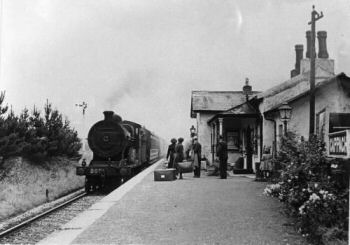
“The first documented introduction of roach in Ireland occurred in 1889 on Munster’s River Blackwater… although it took some decades (around 1940-50) for the species to become widespread upstream”
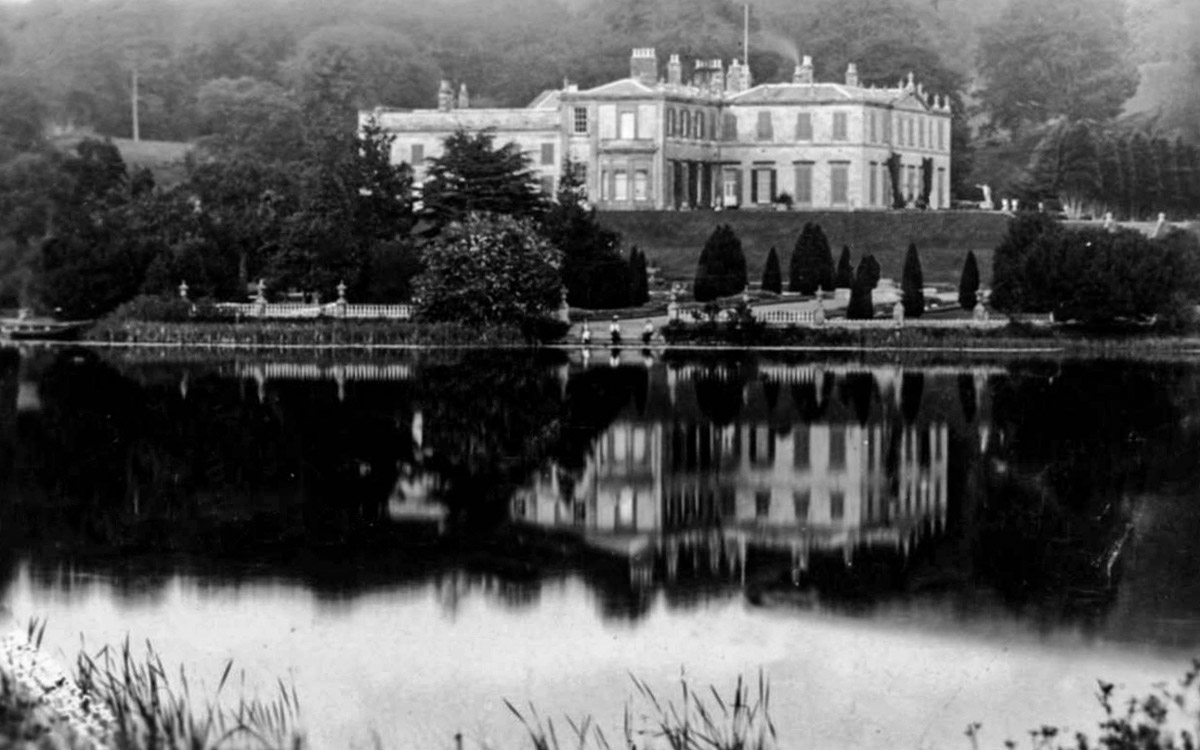
In 1905 around a hundred roach were transferred by order of the Duke of Abercorn, seemingly from the River Blackwater, to the lakes of the Baronscourt Demense, near Omagh, Co. Tyrone to provide a food supply for the resident pike. Exactly why or how this 250 mile-transfer came about is uncertain. In any case, the stocked roach were not seen again and it is assumed that the winter floods of 1905/06 washed at least some, via a small stream, into to the River Derg and the larger River Strule, a major tributary of the River Foyle – the importance of this will become apparent shortly.
Given the nature of early 20th century Ireland, including the general lack of coarse angling tourism, roach began to quietly spread through the Foyle system largely unchecked and unnoticed. Then, the inevitable happened as fish were transferred from the catchment to elsewhere. In 1931 a Captain Grosslen stocked roach into Galbally Lough, a rural landlocked lake near the Tyrone/Fermanagh border. These fish were sourced in the Drumragh River, a tributary of the Foyle, south of Omagh. Several more stockings took place in subsequent years and the roach became successfully established. Here they remained until dredging works opened up a drain which flowed into the Ballinamallard River, a tributary of lower Lough Erne. Roach were observed exiting Galbally at this time. Much of the scientific literature took this event to be 1960 even though it clearly states originally that it occurred in “the late 1960s”.
By the mid-1950s, as Irish angling tourism progressed quickly, roach had become fully established throughout the Foyle system and were beginning to increasingly attract the attention of visiting UK anglers. In fact, the incomparable Bernard Venables, author of ‘Mr. Crabtree’ and co-founder of the Angling Times, stated in 1957 that the roach fishing on the Fairy Water, a Strule tributary near Omagh, was “the best in the British Isles!”. In the late 50s, a 4lb roach was reputedly landed from the Fairy Water. Oddly enough, 1957 also saw the first official recording in the scientific literature of roach in Co. Tyrone, despite the fact that the species had been established there for several decades!

“For some time, the distribution of roach was essentially limited to the Munster Blackwater and River Foyle catchments, respectively. However, their spread across Ireland from the early 1960s to 80s was rapid; truly an invasion”
For some time, the distribution of roach was essentially limited to the Munster Blackwater and River Foyle catchments, respectively. However, their spread across Ireland from the early 1960s to 80s was rapid; truly an invasion. In 1963 renowned angler and author (and still the Irish record rudd holder) Hugh Gough noted the first roach in the River Erne at Belturbet, Cavan during a match there. By 1968, just five years later, they were the dominant species in catches. At the same time, the roach population also exploded in both lower and upper Lough Erne and follow-up scientific investigations by the then Inland Fisheries Trust (IFT; now Inland Fisheries Ireland) found roach across many different waters throughout the catchment in the late 60s/early 70s. Within a few short years the ecology of these waters had changed quite dramatically, with a decline in rudd stocks being one of the most obvious differences, particularly in Lough Erne where rudd had been very common.
Not only did the Erne received roach via Galbally Lough in the late 60s as mentioned above but clearly anglers must have also assisted in the transfer of the species. Likewise, roach were very soon recorded in the Neagh catchment (River Bann, 1971) and the River Shannon (Cloondara Harbour, 1973), with both introductions attributed to angler’s transfers for both livebaits and/or as a new target species. By 1973 roach were also to be found in the headwaters above Lough Gowna and in the Finn, Woodford & Annalee rivers, with occurrences of IFT staff coming across visiting and Irish anglers with numbers of live roach for bait were becoming more and more common. The first roach in the Inny system, Co. Westmeath was recorded in 1974, a year after a party of visiting anglers were found with large numbers of roach in a keepnet at Finea.

Subsequently, the 23rd May 1973 saw a bye-law introduced prohibiting the transfer of live roach from one water to another (Bye-Law no. 561, 1973, Transfer of Live Roach). However, by now it was too late and the nationwide invasion continued, largely assisted by anglers but also through natural means. By the mid-70s roach had been noted in Lough Corrib, becoming abundant within a decade. The late 70s saw roach recorded in the Liffey, Boyne and Dee catchments. As a direct countermeasure to try and prevent the further spread of roach across the country, live baiting in freshwater was banned outright in 1977 (Use of Live Fish as Bait in Freshwater Bye-law No. 592, 1977) and remains in place to this day. Clearly, these pieces of legislation were too late and largely ineffective.
In 1980, the same year as the establishment of the Central & Regional Fisheries Boards, roach were officially recorded in the River Suck and the Moycullen lakes, Galway although, as with all these cases in this article, roach were almost certainly in existence there for at least several years prior. Roach had also colonised the lower Shannon around this time and had begun to spread throughout the east Clare lakelands. In 1981, Paddy Fitzmaurice, long-serving Irish fisheries biologist, noted that “the only major river systems which appear to be free of roach so far are the Slaney, Barrow, Nore and Suir, Lee, Bandon and Moy systems.” In the following 25 years or so, all of these systems (and more), with the exception of the Bandon, have been colonised by roach, not to mention many more isolated watercourses across the country.

In little over half a century, roach have become one of the most widespread and perhaps numerous freshwater fish in the country, with significant consequences, both positive and negative. In part 2 of this article, we’ll take a look at exactly why roach are so invasive, how they spread so quickly and what impacts they have had on Irish waters and angling alike. You can read part 2 of this article here .
Bill Brazier
References:
Fitzmaurice, P. (1974). Occurrence of Roach, Rutilus rutilus (L.) in the Shannon Catchment. The Irish Naturalists’ Journal, 18(1), 19-19.
Fitzmaurice, P. (1981) The spread of roach Rutilus rutilus (L) in Irish waters. 2nd British Freshwaters Fisheries Conference: 1981; Liverpool 1981:154-161.
Hale, P. (1958). Roach, Rutilus rutilus L., Occurring in Co. Tyrone. The Irish Naturalists’ Journal, 12(10), 259-260
Kennedy, M., & Fitzmaurice, P. (1973). Occurrence of Cyprinid Hybrids in Ireland. The Irish Naturalists’ Journal, 17(10), 349-351.
Mercer, J. (1968). Roach, Rutilus rutilus, L.: A New Record from Co. Fermanagh. The Irish Naturalists’ Journal, 16(2), 52-52.
Quigley, D.T. (1985) “Irish Specimen Roach”. Article in Coarse Angler magazine 8 (4) September 1985.
Went, A. E. J. (1950). Notes on the introduction of some freshwater fish into Ireland. Journal of the Department of Agriculture, 47, 119-124.
Wheeler, A. (1977). The Origin and Distribution of the Freshwater Fishes of the British Isles. Journal of Biogeography, 4(1), 1-24