
The Future – Michael O Reilly
Light Rock Fishing (LRF)
Issue 9 (Mar-May 2016) Michael O Reilly (then aged 16)
Simply put, kids are the future of everything – politics, business, sport, the environment and, of course, fishing. It is up to current generations to nurture them, to encourage them and to teach them. However, some young anglers appear to need little teaching and are already way ahead of their years in terms of ability and knowledge. Michael O’Reilly can already be classed as a true all-rounder, chasing game, coarse and sea fish, but it is light rock fishing (LRF) from the seashore that has quickly become his favourite way of fishing. It’s fun, easy to do, accessible to all and, importantly, is not at all to do with the size of the fish – it is about fishing for the sheer love of it. Over to Michael to sing its praises…
Light rock fishing (LRF) is a modern ultralight lure fishing style using finesse rods to target a wide range of species on small lures. It originated in Japan where its known as light game but has spread right across the world since a dedicated group of anglers from Jersey did a lot of research and promoted this. Light rock fishing kicked off from there and soon spread across the UK before reaching Ireland where it has grown immensely in popularity. I can know walk into my local tackle shop, Southside Angling , and find a vast array of soft plastics, finesse jig heads, braid, LRF rods and reels. One of the reasons light rock fishing is becoming so popular is because of the sheer simplicity and the contrast of species that can be caught all year long. All you need is your ultralight rod, small reel and a small bag containing your lures .This mobile approach means you can sneak in impromptu sessions and get out fishing more often, therefore catching more fish. It’s also a great way to get kids hooked on fishing!
The list of species that can be caught using LRF tactics is endless. Recently, during a 24-hour species hunt organised by my good pal Gary Blake, I had 19 species with the majority of them falling to light rock fishing tactics. That was an excellent species hunt and I would thoroughly recommend taking part in it this summer! Using this scaled-down ultralight approach gives you a new perspective on how fish behave and tests your skills to the limit, especially when you hook a decent fish! Even an average sized pollock or mackerel will put a nice bend in the rod and provide a spirited fight, bringing a smile to the anglers face. A lot of people associate light rock fishing with only catching small fish but believe me when I say it big fish do take small lures! I’ve had cod to 5lb on a two inch section of Gulp Sandworm along with 6lb-plus pollock on a small metal jig. There’s also the freshwater side to look at, where the same terminal tackle can be used in the canals, rivers and lakes for shad, perch, pike, trout, roach and even carp!

The setup
Light rock fishing rods are extremely light and have a fast action. They are usually around 7ft in length and are rated from 0.5g to 7g. Be careful not to exceed the maximum casting weight as this can result in rod breakages. There are two types of LRF rods, solid tipped and tubular. Without going into too much detail, solid tipped rods are soft (which allows the fish to inhale the lure without feeling any resistance) and offer fantastic sensitivity when inching a lure across the bottom or fishing on the drop. Tubular rods recover faster when compressed which allows you to cast further, transmit more feel, are better for imparting action into a lure and therefore are ideal for fishing metal lures or fishing “sink and draw” style. They range in price from the cheap and cheerful Rockfish UL which retails around €35 right up to the specialist rods such as the Major Craft Zaltz or the TICT Ice Cube which are a lot dearer. I’m currently using the Rockfish Dual from HTO. This rod has a casting weight of 1-8g, is 7ft 6’ in length and is supplied with two tips, a solid tip and a tubular. I would highly recommend this rod to anyone looking to take up light rock fishing or looking for a new rod. The rod is light, sensitive, well priced, casts well and has a fair bit of backbone well capable of landing a decent fish, which I’ve put to the test fishing for pike. These rods are paired with a small sized 1000 or 2000 sized fixed spool reel, loaded with either a light PE braid (6lb to 8lb), depending on the type of ground your fishing, or a light fluorocarbon (4lb to 5lb). This provides a light balanced setup and will ensure you get the maximum enjoyment out of every fish you catch be it big or small.
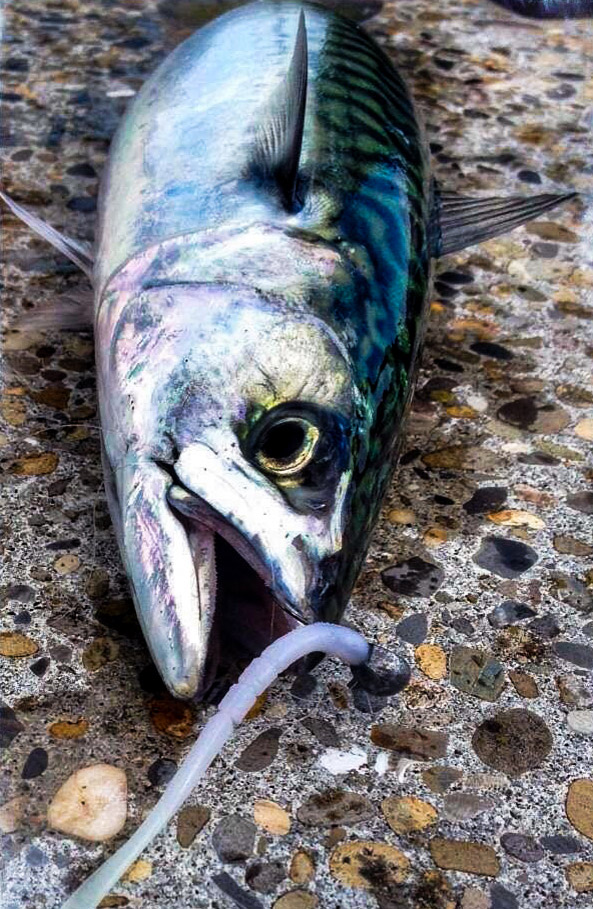
Braid vs. fluorocarbon
Braid is strong, doesn’t stretch and has an incredibly thin diameter which allows you to cast further. The lack of stretch offers terrific bite sensitivity which means you should be able to feel when your lure hits the bottom and when a fish picks up your lure. A fluorocarbon leader of 2 to 3ft is essential when using braid as it isn’t very abrasive resistant. It can wear out and break if continuously rubbed against sharp rocks which will lead to lost fish and lures. Your leader should be a lighter breaking strain than your braided main line. For instance I would use a 4lb fluorocarbon leader with 6lb braid or a 6lb fluorocarbon leader with 8lb braid, depending on the terrain of the mark I’m fishing or on the size of the fish I’m targeting. I use an Albright knot to connect braid to fluorocarbon, which is relatively easy to tie with a bit of practice. When loading a reel with braid be sure to slightly under-fill the spool to minimise the chances of wind knots and tangles. I like the YGK G-soul x3 braid in 6lb as it offers terrific value for money, is super thin and casts like a dream.
Fluorocarbon is almost invisible, abrasion resistant, sinks well but it has a thicker diameter. The thicker diameter means that to get the best out of the line I wouldn’t exceed 4lb bs as heavier diameters can coil off the spool and reduce casting distance. It also doesn’t transmit the bites as well as braid does. The fact that it sinks may seem miniscule but when fishing in windy conditions it provides better presentation and doesn’t kite off like braid does in the wind. Most reels come with two spools so I load one with braid and one with fluoro’ to provide me with the choice on the day depending on the conditions.

Lures
There is a wide multitude of lures used for LRF’ing. They range from a tiny 0.5 inch right up to 4” and vary in shape, size and colour. One of the most popular lures used are rag worm imitations, such as Marukyu Power Isome and Berkley Gulp sandworms. They are both scented which allows fish to home in on them even in murky water. Marukyu’s are packed with amino acids which draw fish to them and have a sweet blueberry-like smell. They are also 100% biodegradable which means they are edible to fish, so even if you miss the first bite chances are the fish will come back for more! Gulp worms have a distinctively stronger fishy scent and are slightly more durable. Berkley also do one of my favourite lures, the deadly 2” Fish Fry. This lure, although named Fish Fry, resembles a small lug worm with a slim profile and a thin little tail that waves enticingly with even the slightest of movements. I thoroughly recommend storing all scented lures in a small waterproof tub as the packets they come in contain scented juices and can leak. If not stored in this juice these artificial baits will shrivel up and become useless. They can be mounted on a jig head whole for larger species such as wrasse and pollock, or be cut up into smaller sections to be used for smaller species on split shot and dropshot rigs.
Although scented lures may reign supreme on certain days it is useful to use unscented lures too! I’ve noted that my catch rate increases when using lures that glow in the dark, especially in the winter months or in low light levels, especially for herring and pollock. In this case I would use lures such as the Ami from Aquawave which resembles a small shrimp or the Ecogear Grass Minnow which imitates a tiny baitfish. The idea is to match the hatch of what the fish are feeding on.
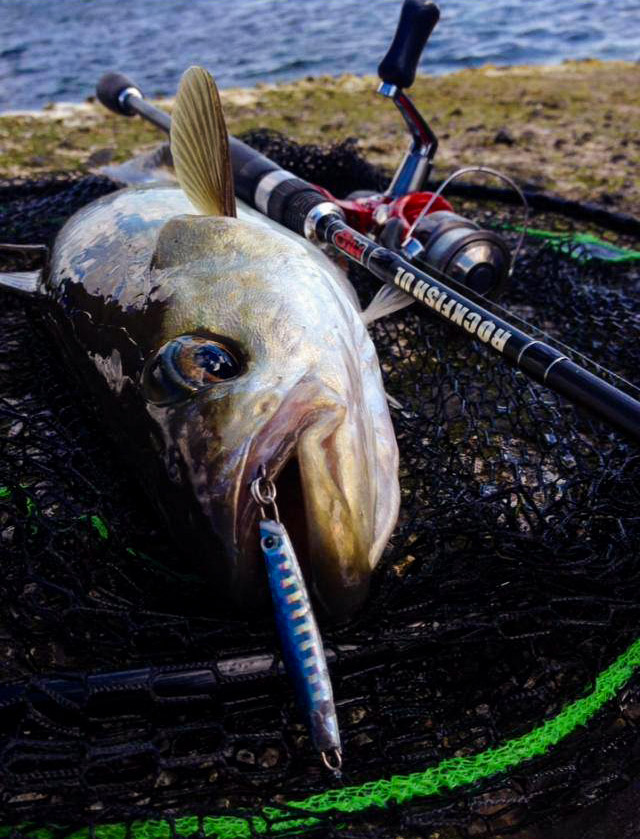
Metal jigs
One of my favourite methods is fishing with metal jigs. You simply cannot beat the crash diving take of a pollock, the drag singing and your rod doubled over! Metal jigs are absolutely deadly when it comes to matching the baitfish that many fish are feeding on and come in all weights and sizes; jigs, spoons and blades. Although they will catch fish on a standard straight retrieve, introducing pauses, jerks and fishing “sink and draw” will produce more fish. Fishing O.T.D (on the drop) where you allow the lure to sink under a controlled fall can be excellent, especially for pollock. “Deadsticking” is another method which can produce bonus fish. Basically all you do is let the current do the work while you leave the lure static. If you are fishing rough ground I wouldn’t really suggest this technique as tackle losses can be quite high. Bites can be quick so a flick of the wrist will ensure you set the hook. A tubular rod is ideal for metal work as it transmits and responds well. Fluorocarbon can also be used if you’d like to shy away from braid as bites tend to be quite aggressive. Metals can provide some hectic action especially in summer months as the mackerel and pollock arrive inshore to feast on the baitfish. I change all treble hooks to a single size 4s as I practice catch and release and find they hook up better anyway. It’s not uncommon to catch over 50 pollock per session along with mackerel and the odd codling. The majority of my fishing with metal jigs is done from rock marks which are riddled with kelp and enormous rocks where tackle losses can be high. Fish are attracted to these features as they provide cover and are home to crustaceans and prey fish. So get in amongst those snags, don’t cry if you lose a few lures along the way and you’ll reap the awards!
Rigs
Split shot rig
This rig is simple and excellent for mini species. It consists of 2ft of fluorocarbon, a split shot and a hook (size 16 to 8 depending on the size of the lure and the target species). You can alternate the distance between the weight and the hook to achieve a different fall rate on your lure. By fishing the split shot close to the hook you will be in direct contact with your lure and be more inclined to fish it faster. By fishing the split shot 2-3 inches away from the hook your lure will sink slower which is ideal for mini species such as blennys, as they tend to prefer a slower moving bait. A standard hook (e.g. Kamasan B983) will be sufficient but I find longer shank hooks like a Gamagatsu F31 provides a better hook-up rate. This rig is also ideal for fishing in rock pools.
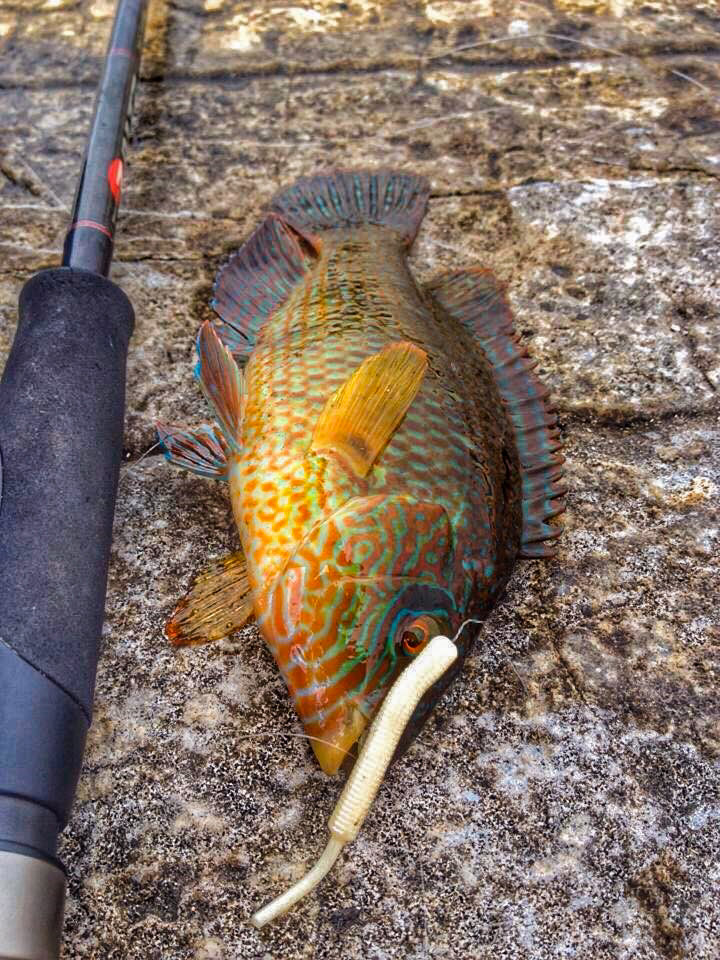

Dropshot rig
The dropshot rig is ideal for presenting your lure off bottom accurately around structure. It consists of a 4ft length of fluorocarbon, a hook and a dropshot lead. These leads have a swivel that is designed to grip the line without tying a knot and in the event of a snag will allow you to get your rig back whilst leaving the lead behind. The great thing about using these leads is that you can adjust the distance between the weight and the lure to fish different parts of the water column. It’s important to leave a tag end of around 2ft to allow you to do this. I tie the hook on via a palomar knot and this ensures that the hook stands proudly at a 90 degree angle off the line. Simply drop your rig down alongside, for example, a harbour wall and let it hit the bottom. Tighten up the slack line until you feel the resistance of the weight. Your lure will then rise up and be suspended off the bottom. Shaking the rod tip will cause your lure to writhe and twitch just like a real ragworm/baitfish. You can also achieve a weightless effect on your lure if you allow a bit of slack line by dropping the rod tip. The lure falls enticingly and this is when most of the bites come. The main idea of this rig is to move the lure and not the weight. If you don’t get any bites simply raise the rig and drop it down again to the left or right and repeat the same process. You can also cast the rig to cover more water and search out potential hidden features which has been very successful for species such as flounder and whiting. Simply cast the rig out and let the lead hit the bottom. Tighten up to the lead and impart action into the lure by twitching the rod tip and using a slow retrieve to keep in contact. I prefer column weights for fishing vertically as they tend to snag less and round ones for casting as they kick up more sand from the seabed, which is irresistible to flounder in particular. This is my preferred setup when fishing a deep water mark or in rough conditions.

The jighead
The jighead is a hook with a weighted head which you simply mount your lure onto. It’s versatile and can be fished vertically or cast out and fished in different depths of the water column. Whether it be bumping along the bottom for flatties or hopping it amongst the rocks for wrasse. The most important factor of fishing the jighead is to use the lightest one you can get away with depending on conditions and the depth of water. A lure that falls slowly through the water will look far more natural than one that rockets straight to the bottom.
Where to fish?
Harbours are excellent LRF marks as they are easily accessible, provide shelter and are home to many species. The mini species love to hide in the cracks and crevices along the harbour walls. Light rock fishing can be done from beaches, estuaries, rock marks and even rock pools! The main element to look for in any LRF mark is structure. By structure I mean features such as kelp/weed beds, rocks, sandbars and gullies. Fish love structure and are drawn to it. Rockpools are one of the best places to practice your light rock fishing skills as quite often you can actually see the fish dart out and engulf your lure. Remember, there are no hard and fast rules to fishing so get out there and give light rock fishing a go!
Michael O Reilly
For frequent catch reports check out my Facebook page Ultra Light Ireland