
Flood prevention (done properly)
Surely there is a better alternative to dredging rivers to relieve flooding? Yes there is and it’s high time Ireland adopted more astute, modern methods says biologist Gary Robinson
Issue 20 (Jan-Feb 2018) Gary Robinson


There’s an area in Wales known as Pontbren, located in the River Severn catchment and featuring a small river with an unpronounceable Welsh name. The river regularly flooded rendering land unusable and drainage was a major problem. With the joining of Wales to the EU, the farmers from this small agricultural section of the Welsh countryside diligently adopted the directives from the EU’s Common Agricultural Policy (CAP) in the hopes of better returns from their farming efforts. In line with policy they drained, cleared and reseeded land, stock numbers were raised and continental breeds were introduced. Indeed, profits did go up but at a cost.
By the early 1990’s this community of Welsh farmers had realised that after 20+ years of the CAP and its promises, they were no better off at all. They were working harder, changes they had made to the landscape had deteriorated the land, any profits were being negated by rising feed, fertiliser and bedding costs and flooding was becoming more frequent. Sound familiar? Disillusioned with the poor returns from the EU’s CAP, some of the farmers decided to abandon its directives and to approach their farming in a more sustainable manner.
Initially, some 26.5km of hedgerow were reintroduced along with the planting of 120,000 native tree species which accounted for roughly 5% of the total farmland to be improved (approx. 1,000 hectares). Removing them had damaged the landscape by simplifying it and removing multiple and varied habitats. It was thought that by reintroducing these trees and hedgerows less topsoil and its nutrients would be washed away during rainfall events, thus improving the quality of the land. The windbreaks provided would also keep livestock sheltered during high winds and heavy rains. The forestry is also managed to a point where it can provide enough wood chippings annually to provide bedding for the livestock, thus reducing farmer’s expenses.

The creation of five acres of wetlands/bog in the area was also implemented. The 12 ponds that made up these wetlands would act as natural reservoirs on the farmland. During periods of heavy rainfall these wetlands would soak up most of the excess surface water, releasing it slowly through the ground and into the local streams and river. Think of wetland or bog as a sponge; it soaks up huge amounts of water which it then allows to drain from it slowly when no pressure is applied. The changes in land use saw a conversion of just 5% of the farmland from open pasture to hedgerow, forestry and wetland, improving the land naturally for the farmers involved.
All this work had an unforeseen consequence; flooding became a thing of the past for this community. Monitoring has been ongoing in the area and the results of some scientific experiments have been startling, to say the least. The farmers had assumed that the planting of native tree and hedgerow species would improve their land in terms of quality but it had also increased its drainage capacity considerably. Observation told scientists that the areas that had been replanted were draining over 60 times faster than those of open pasture only 10 metres away from the trees! Sounds far-fetched but when one considers that a mature tree can absorb more than a couple of hundred litres of water in a day it becomes apparent that reforesting areas has the potential to soak up flood waters like blotting paper!
“By just replacing 5% of the cleared and drained land with native planting and wetlands, peak water flows during flood events have been reduced by almost 30%”
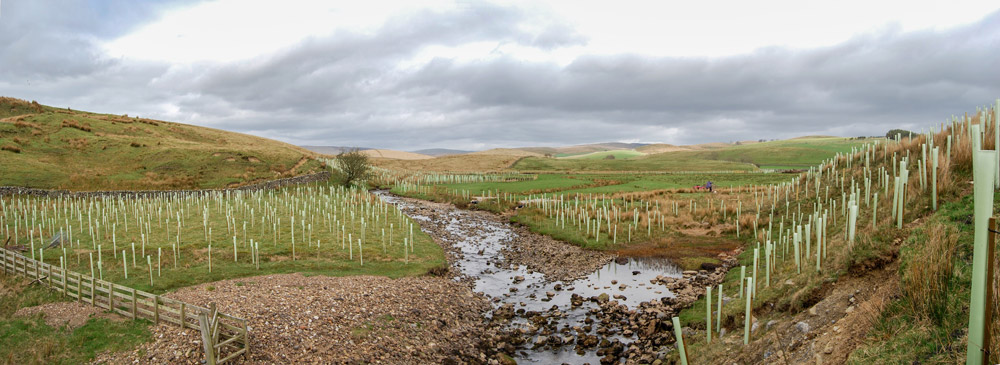
By just replacing 5% of the cleared and drained land with native planting and wetlands, peak water flows during flood events have been reduced by almost 30%. If the percentage of restored land grew by another few percent then the highest flood waters will be 50%, or half, of what they have previously been. Therefore, it makes perfect sense to go about the reintroduction of trees and bogland along our rivers if we wish to reduce our water flows and severely reduce the human impact from flooding, a natural phenomenon that seems to be occurring with increasing frequency. Other benefits to the countryside have included the creation of newer and diversified habitat on farmland. This has seen an increase in the number of species returning to utilise these habitats. One great example are the raptors, the agri-sector’s natural answer to mouse and rat control.
An improvement in the livestock and their home, improvements to the local habitats, increases in wildlife diversity and the ecosystem services they provide and a big reduction in water levels make a project like the one undertaken in Pontbren the ideal candidate for implementation in Ireland. We are a predominantly agricultural nation, there is more cleared land in Ireland now for the agricultural sector than ever before, floods are becoming more frequent and vicious and we are losing our native flora and fauna at an alarming rate. To implement a policy of flood protection through better land use and management makes perfect sense. But we don’t do ‘perfect sense’ here. We don’t care much for long term plans because our politicians think as far as the next election and no further. The common response from our politicians is to build walls and dredge rivers, effectively to canalise our rivers and turn them into nothing more than flood drains. There are a couple of reasons why this is a terrible idea.
“We don’t care much for long term plans because our politicians think as far as the next election and no further. The common response from our politicians is to build walls and dredge rivers, effectively to canalise our rivers and turn them into nothing more than flood drains”

Firstly, a dredged river is a river that has been stripped of its substrate, the bottom. It is here that the invertebrates that make the basis of the aquatic food web flourishes. It is here that fish spawn. To remove this material is to destroy the aquatic life found in rivers and on their banks. Anecdotal evidence abounds of OPW relief drainage schemes destroying the fishing in small streams and rivers for generations. Take away the food and spawning grounds and the fish have nowhere to go.
Environmental cost aside, let us look at the human cost. Dredging and channelling rivers encourages faster water flow. Canalising them by removing bends and straightening them also adds to this increased water flow. What this means is that the land surrounding the dredged rivers drain very quickly but all this water has to go somewhere. Gravity dictates that it will flow downstream at a much faster rate than it is supposed to. Where does it go to? It doesn’t disappear! It ends up at the bottom of the system and can be a major exacerbating factor in coastal flooding events.
Living only a couple of kilometres from Kinvarra, Galway it is fair to say that the flooding at the end of January this year was relatively close to me. A combination of low pressure, onshore winds and a spring tide were all blamed for a ‘perfect storm’ of conditions that swamped parts of the coastline along the west of Ireland. I have not yet heard one single suggestion that the huge rainfall amounts during the flooding periods may have found its way to the coast faster than would have been normal through dredged channels, swamping an already stretched coastline.

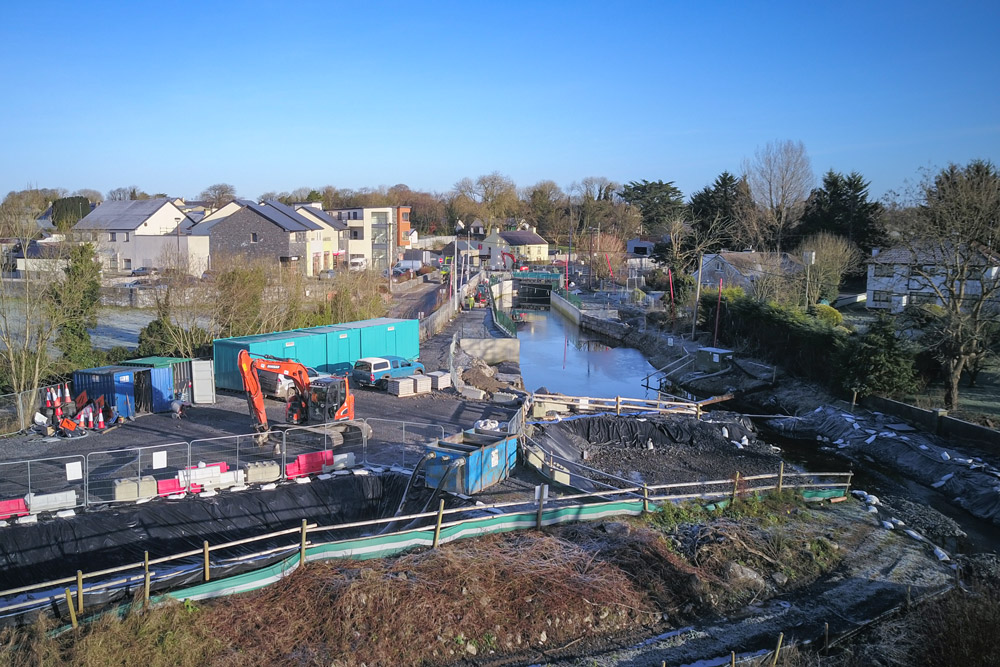
Taking Galway City as an example, the docks area here became very badly flooded. It’s no secret that the River Corrib only has a short distance to run before hitting the sea. The Lough Corrib catchment drains a huge area of land and previous studies have shown to me that a lot of the streams and rivers, particularly on the eastern side of the lough, have been dredged to assist the drainage of agricultural land. High winds and spring tides rarely flood the docks area. Did the increased flow through drainage and dredging efforts provide the straw that broke the camel’s back? In this case, has the dredging just pushed the farmer’s problem downstream and forced it to become somebody else’s problem?
Unfortunately, our politicians appear not to want to see sense when it comes to this issue and are hell bent on pushing ahead with dredging programs despite many of the intended dredge sites sitting in Special Areas of Conservation and with no Appropriate Assessment or Environmental Impact Study being undertaken, something required under EU environmental law when working in these areas. Funny how we can ignore the EU when it suits us but at other times we have no choice but to obey them (water charges, anybody?). With the possibility of an election being called at any time, many a politician is out on the trail promising dredging and flood barriers to all and sundry in a pathetic attempt to secure a few votes for themselves. The cynic would also ask about who owns the concrete companies that are going to profit handsomely from these State contracts? That could be a fine can of worms to go poking around in for anybody inclined to do so….
The notion of dredging was first introduced wholesale to Ireland after the completion of Ardnacrusha hydroelectric dam on the Shannon. Advice was offered with regard to management of the Shannon and dredging featured heavily. This was in a time when environmental issues were very much misunderstood and long before we all became aware of the importance of protecting our biodiversity and the habitats that support it. The global scientific community has progressed a lot since the 1950’s. Unfortunately, our river basin management style has not. “But this is how we’ve always done it.”
“Dredging is not the answer, better landscape management is”
Dredging is not the answer, better landscape management is. A project of better management will improve things for us all. Flooding events will be reduced, the countryside will benefit from increased diversification of habitat and inhabitants. Most importantly, in terms of this publication, our rivers will remain intact and improved with none of the substrate being removed and less topsoil and fertiliser being washed into them. That can only benefit our fish stocks and our fishing!
Gary Robinson