
Miracle at the convent: the resurrection of Lough NaGlack (pt.1)
Colm Crean takes a trip down memory lane and tells the story of one of Ireland’s best ever big bream waters, Lough NaGlack near Carrickmacross, Co. Monaghan
Issue 2 (Mar-Apr 2015) Colm Crean


In March 1980 along with three friends I paid my first visit to Carrickmacross, Co. Monaghan, the mecca for Irish bream anglers. I was already exhibiting all the symptoms of a serious bream fixation at that stage. This was just a quick overnight visit, but we packed a lot in. We caught skimmers at Corstown in daylight, then moved briefly to Monalty after dark, where we lit a campfire, cooked a fry-up and drank a few illicit beers. We caught no fish, but the wood-smoke and the magic of night-fishing, along with talk of Monalty’s monsters, set the imagination racing. We rounded off our adventure at the Nuremore Hotel disco, reputedly then the biggest in Ireland, before sleeping fitfully in the car in the Hotel grounds. As we dozed off, someone identified the lake behind us as the Convent Lake, a.k.a. Lough NaGlack, now sadly devoid of fish following pollution. In the darkness, glimpsed through the trees, it looked inky black and forbidding. In August that same year, Neil McCabe and I returned to do things properly, with a week at Olive Shackleton’s Ballyhoe guesthouse. We caught fish every day, bream and tench in good numbers from both lakes. Towards the end we scrounged a lift to Monalty one evening, where it rained on our motionless swingtips for most of that night. Nevertheless, Neil still managed to catch a single awesome bream and, at just over 5lbs, the biggest we’d ever seen. The following year, 1981, I camped at Monalty for much of the summer, and managed c.50 bream, including my first specimen, plus hybrids of near-record size. As my tent became a fixture at the lake, I got to know Jim McMahon from the local tackle shop, and an expatriate Englishman called Norman Howarth, the top local matchman and guesthouse owner. Norman had moved from Lancashire to Carrick’ in the mid-1960s, with angling friend Dave Shorthouse, largely on the strength of the huge catches they had amassed whilst holidaying at NaGlack. They both married local girls and continued to enjoy the incomparable fishing, back in the days before specimen-hunting, when bream were caught on bread flake and big hooks. Catches were weighed by the hundredweight in keepnets, and they rarely bothered weighing individual fish. However, a trout angler named Scotson had famously landed a NaGlack bream of 10lbs 11oz on a spinner in 1957.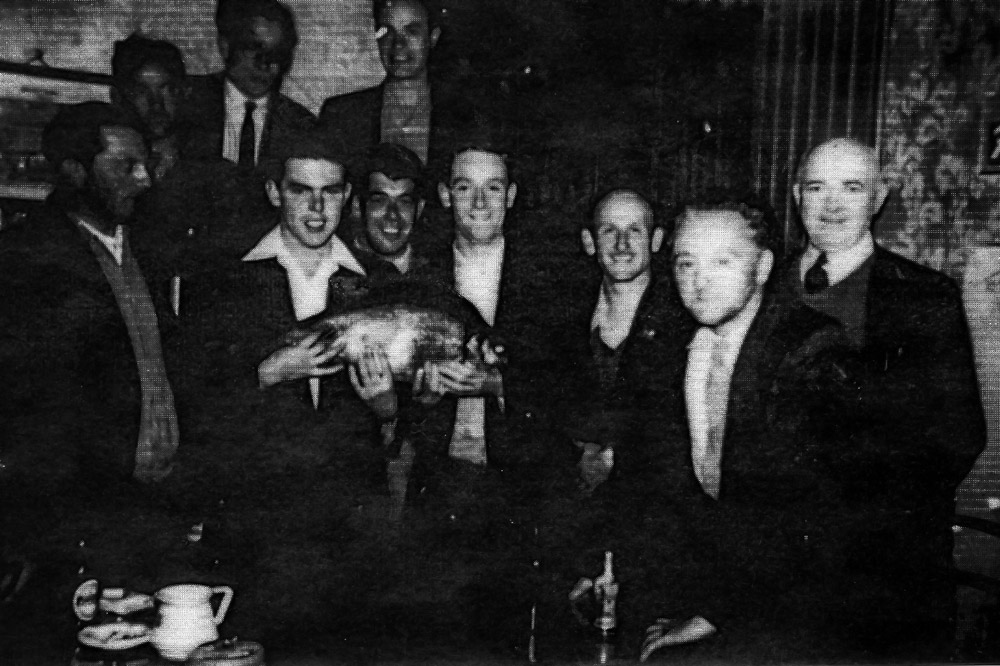
The locals often described how an emergency call went out one day in 1975, with news that the margins at NaGlack were clogged with dead and dying bream. Inland Fisheries Trust staff led the efforts to salvage as many struggling fish as possible, and some survived the transfer to nearby Dick’s or Corcrin. However, no-one doubted the scale of the tragedy. NaGlack lay in a sheltered tree-ringed hollow, and catastrophic de-oxygenation following a calm spell meant it was now devoid of fish-life. And so it remained for the rest of that decade. No-one bothered fishing NaGlack, which was generally deep, dark and inaccessible, with tall trees, dense reed-beds and impenetrable weed round much of its margins. Each dusk brought hundreds of noisy crows to roost in the ancient trees, and the silhouettes of graveyard headstones added to the unsettling and oppressive effect. There was no sign of fish-life, and little encouragement for anglers, especially with so many other lakes in the area regularly yielding huge hauls of bream. One sunny day in August 1981, during that first long summer at Monalty, I encountered Norman during my daily walk into town for bait and provisions. He was standing near the entrance to the tree-lined avenue, high above NaGlack, and he pointed to what had caught his attention; dark motionless shapes under the surface at the edge of the lilies, perhaps 100 yards below us. Norman didn’t respond to my confident assertion that these must be rudd, but I later learned that that he had pre-baited and fished the rickety stand nearby, one misty dawn soon afterwards, only to draw a blank.
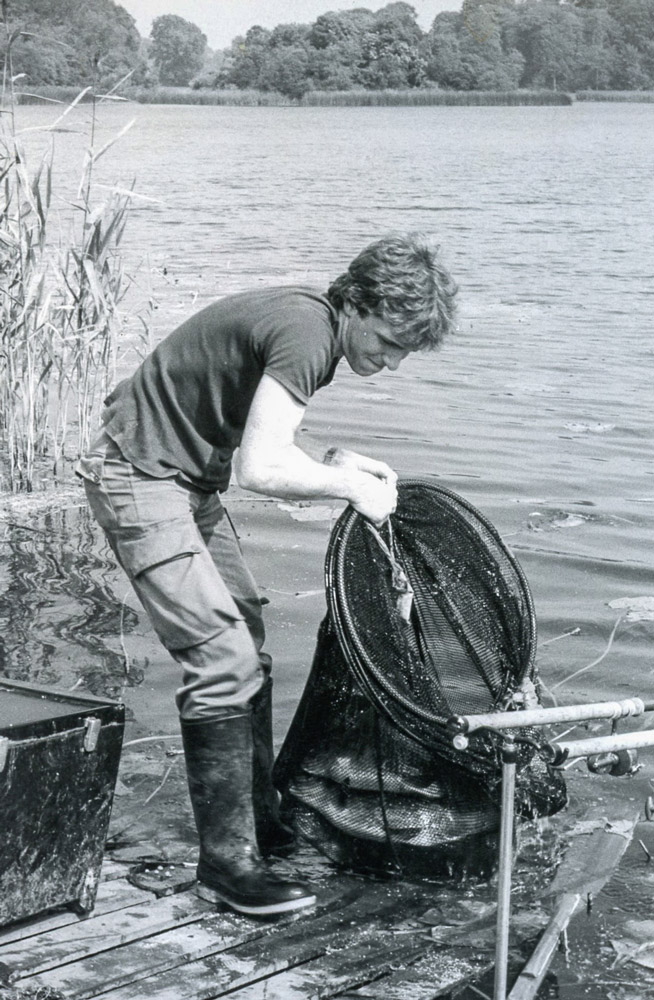
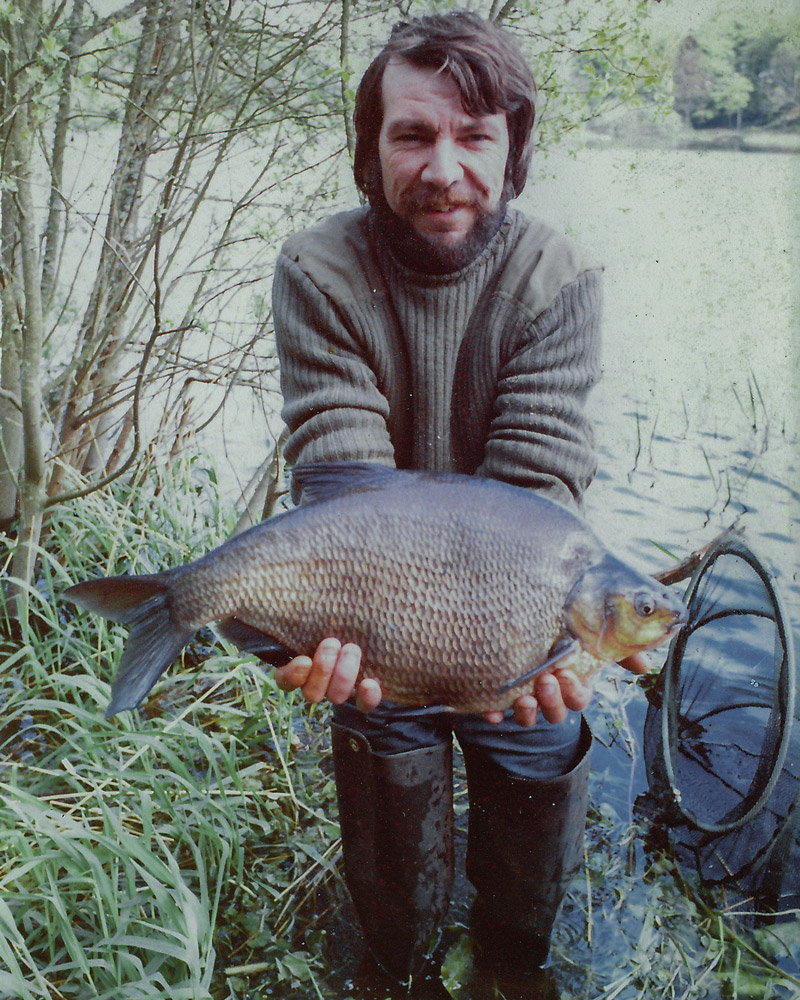
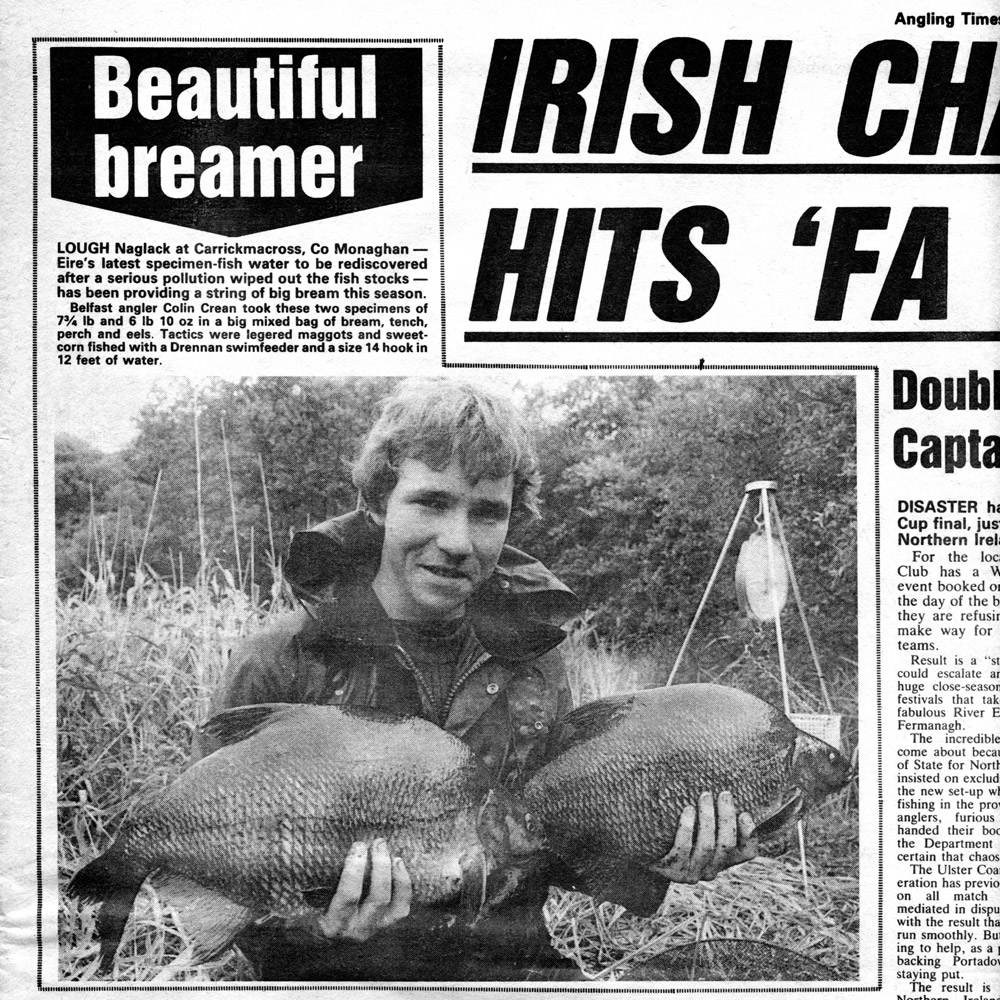
Within a month Norman was directing the first English anglers to NaGlack, and I showed two regular visitors, Steve and Stan, to the swim that had produced fish for me. They trumped my achievement, with twenty bream to 8lb 15oz. Norman realised the tourist potential, and he hijacked a trip from Chris Dawn of Angling Times, who had not intended featuring Carrickmacross in his itinerary. I needed little encouragement to join Norman in conjuring up a few 7lbs bream for Chris’s camera, followed by a feast in the Nuremore Hotel , courtesy of Bord Fáilte. Even then, we did not realise the goldmine we had uncovered, and we speculated about a single shoal surviving the 1975 fish kill. It was as only as 1983 progressed, with an endless succession of bigger bags and bigger fish, that we began to realise we had triggered a mini tourism boom.


I will forever associate the song “Africa”, by Toto, with those first two summers at NaGlack. During the heatwave of July- August 1983, my tent was pitched in near swamp conditions beside NaGlack’s narrow channel, and Jim and I ambushed the bream as they came rolling and crashing past us at dawn each morning. Fred Foster and Norman witnessed one memorable catch, when I likened the bream to drunken football supporters, as they advanced up the channel towards us. On another occasion, we were one of three groups enjoying massive catches at different locations separated by 400 yards, so NaGlack clearly held more than a single shoal of bream. Such was the dominance of Carrickmacross that other angling centres protested that they simply could not compete. The Irish Specimen Fish Committee (ISFC) raised its threshold specimen weight to 8lbs, and limited the number of claims per angler to three, but the bream and hybrids from Monalty and NaGlack still dominated the ISFC lists. They obligingly grew bigger throughout the 1980s, as first 8lbs, then 9lbs and finally 10lbs fish became commonplace.
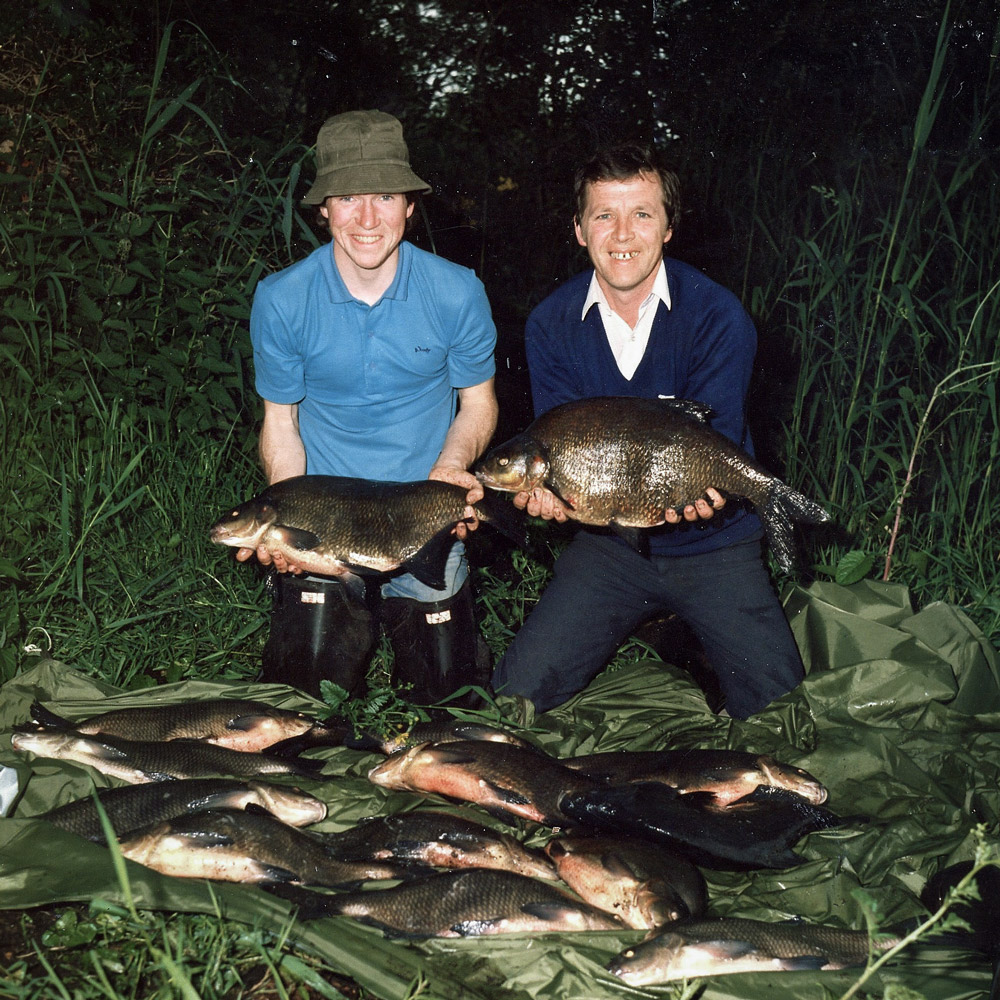
The rest is history. By June 1990, with the capture of the first 11-pounder, the century-old bream record was looking precarious. But we had ignored the warning signs as catches fell away in the late 1980s, never suspecting that history could repeat itself. I managed very little fishing that fateful summer of 1990, following the birth of my first daughter, but I will never forget Jimmy’s chilling phone call in September, describing how gasping fish were once again surfacing all over NaGlack. Following that second fish-kill we launched a two-year campaign to persuade the authorities to upgrade the sewage treatment plant upstream of NaGlack, as its capacity could no longer cope with the town’s growing population. Jimmy featured on RTÉ news, with footage of the overspill sewage being sprayed around the fields bordering NaGlack. The lake was by now acting as a septic tank for Monalty, just 400 yards downstream, but at least NaGlack’s upstream position afforded Monalty some protection. We reluctantly switched our attention there, leaving NaGlack condemned to a long slow death of constant pollution, over-enrichment, burgeoning weed growth and ultimately de-oxygenation when the weed died back in autumn. Our media campaign, petitions and awareness-raising ultimately bore fruit, with a £2m upgrade for the sewage plant, but once again NaGlack lay unfished and largely ignored. However, its emotional hold on me was too strong, and I would pay an occasional pilgrimage after a session at Monalty.
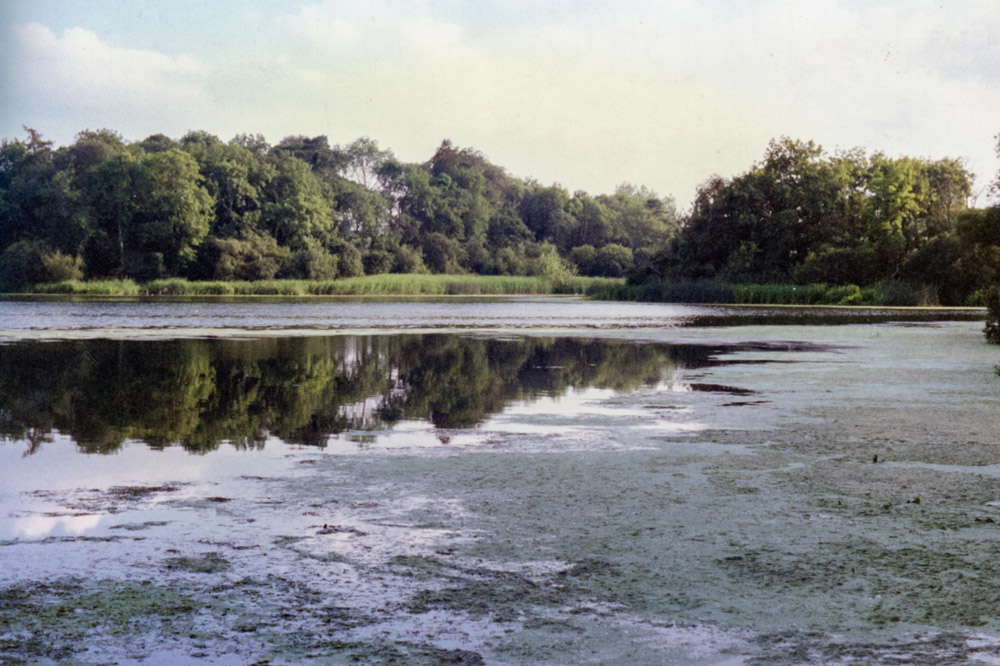
On a hot Sunday in August 1992 I was to rediscover NaGlack’s survivors for a second time, launching another decade of unrivalled bream fishing, but this time with no fanfare. Those neglected fish had continued to thrive and grow, but the story of their habits, and the “Hiawatha” tactics we used to track them down, must wait for another day…
Colm Crean
Part 2 of Colm’s excellent account of the monster bream of Lough NaGlack is available in issue 3 of the magazine. Read for free, here