
Bank on the basics
Irish international Peter Driver gives some great advice on winter fishing for stocked rainbow trout
Issue 19 (Nov-Dec 2017) Peter Driver Peter Driver & Off the Scale magazine


It is over the last decade or so that we have seen winter fly fishing becoming more prominent in Ireland. When I was growing up, the dreaded end of September meant the fly fishing gear was put away and I would spend the winter months tying flies that would have aspirations of emptying rivers come the following March. Thankfully the case these days is the river gear is packed away and we swap the lightweight nymphing rods for our 6,7 and 8 weight bank rods. We have seen in recent years the emergence of plenty of manmade fisheries that offer the angler great winter sport at reasonable costs.
There is also plenty of choice as different fisheries present different fishing challenges, from more natural, mature environments that challenge our casting ability to well-wintered fish that test our skill and nerves. The methods used generally in this field of fly fishing is ever evolving; there are new approaches and developments in materials regularly, each being hailed as the next best thing. Sometimes, to be honest, it is hard to keep up with it all.
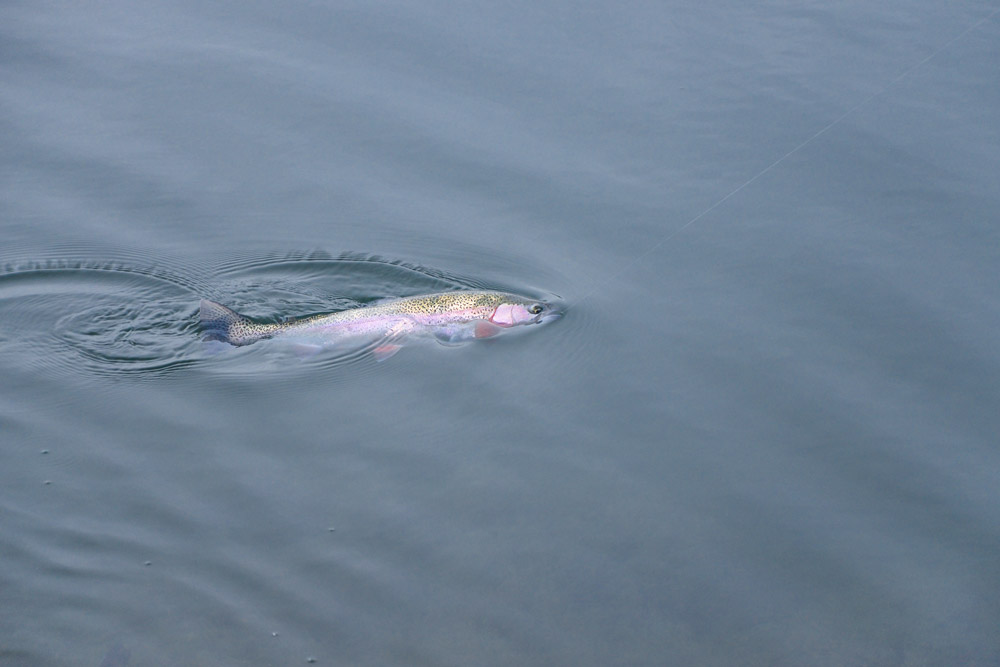
I have found over the last couple of winter seasons it’s sometimes just as effective to stick to the basics and do the simple things right rather than get wrapped up in all the new developments, tackle and fly tying materials. So, for the rest of this article I hope to give you some simple and yet still very effective methods and patterns to tempt the rainbows from their winter ponds. It is always important to check the fishery rules when you arrive to see what is and is not allowed to be fished.
Blobs
While a few fisheries have rules regarding the fishing of blobs (egg imitations) in certain ways, it has to be said that they are the staple diet of the bank angler. Simple as simple gets to tie and fish correctly – they can be deadly. There are a couple of ways you can fish the blob; firstly they can be presented through stripping or retrieving on sinking lines. Fished alone or as part of a team the trick here is to get the depths right and the retrieve just the way the fish want it. So, it is good practice once you cast out your flies to count down to a chosen depth, depending on the sink rate of your line, and then begin stripping back the flies at various speeds until you get start getting takes or catching fish.
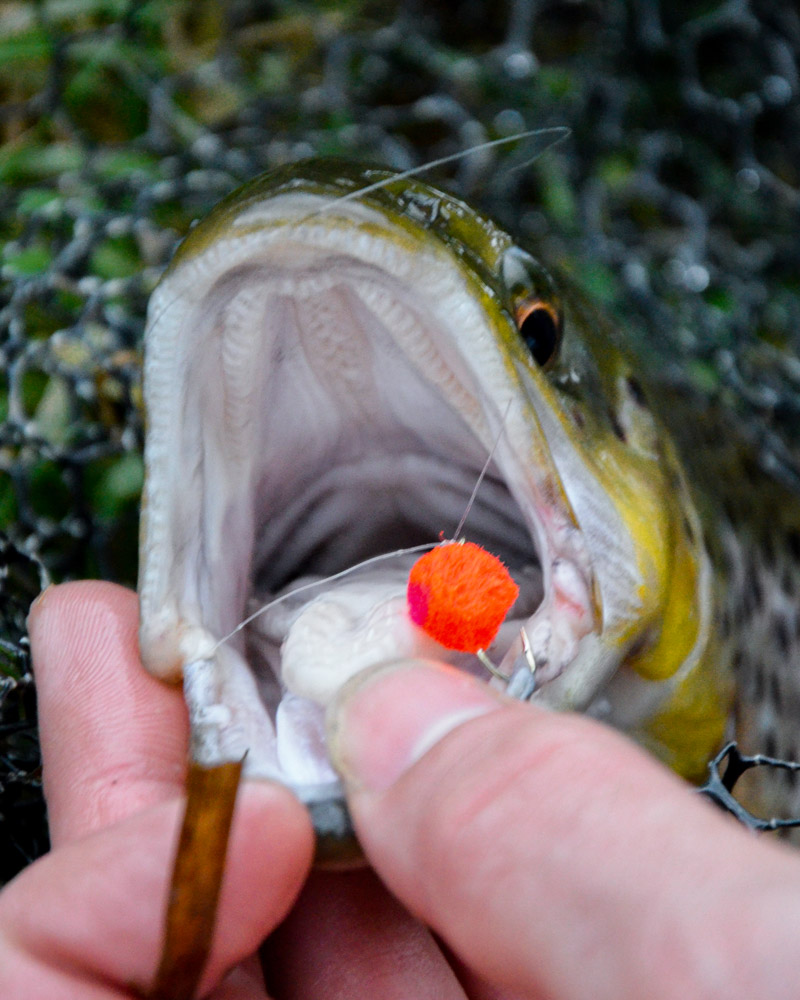

Another popular presentation method would be stagnant (or dead) fishing the blob; this can be done either from the top down or the bottom up. Again, the most important thing here is to choose your depth correctly. Fishing from the top (surface) down, this can be achieved by using a floating line which will suspend the blob at the depth of your leader length, or the depth you allow it to sink to before beginning a standard figure of eight retrieve back towards you.
A common, contemporary practice of anglers now is to suspend the blob under what is called a bung. This simple floating device can be made of plastic foam or a tied bung with buoyant materials used to support the fly, often dipped in watershed to make it float endlessly. With this method you can now leave the blob or blobs at the required depth for longer until a fish takes it. In truth, this is very similar to float fishing for other species. Whilst ‘bunging’, the fly will remain completely stationary which is required sometimes to induce takes from the fish, especially if they are lethargic and not willing to chase flies. The hi-visibility of the bung allows the angler to witness the takes quite easily on those dark, drab wintery days. This presentation method can be used for several other patterns such as squirmies, buzzers, stalking bugs and the like. One key factor to fishing blobs under the bung which I find particularly important is to add a little flat lead to the underbody of the fly and this allows it to reach your chosen depth faster.
What is a Di sink rating on fly lines?
Basically, fly lines can be either floating, intermediate (slow sinking) or sinking. Sinking lines come in different weights, so that some are heavier and sink faster. This is useful in deep water or when wind or undertow prevents your flies from getting down in the water.
Di stands for “density index” and is loosely a proxy for inches per second, although it’s not an exact science and rates differ between both line types, diameters and manufacturers! So a Di3 line will sink at a rate of roughly 3 inches per second, Di 5 at 5” per second and
so on. The higher the number, the faster the sink rate. Typically sinking lines are available from Di1 to Di8.
Different sink rates are achieved by adding certain amounts of tungsten to the polymer coating of the fly line in the manufacturing process.
Fishing from the bottom up can be very effective during the colder days when fish are sitting deeper and feeding amongst the last of the summer vegetation on the lake bed. Here we would use fast sinking lines say a Di3, 5 or 7 sink rate depending on the depths and contours of the lake you are fishing. We often add something to the blob for this method to be most productive; for example, by putting some foam in the back of the fly we now have what is called an FAB (floating-arsed blob). This now allows us to sink the line to the lake bed and slowly retrieve the blob, which is suspended above the line path and the weeds or other snags that offer the fish food and protection. As you can imagine, changing the length of leader will allow your FAB to fish at different depths, and the most important aspect to catching fish in a stocked fishery is you must find the depth the fish are sitting/feeding at for any method to be effective.
“the most important aspect to catching fish in a stocked fishery is you must find the depth the fish are sitting/feeding at for any method to be effective”
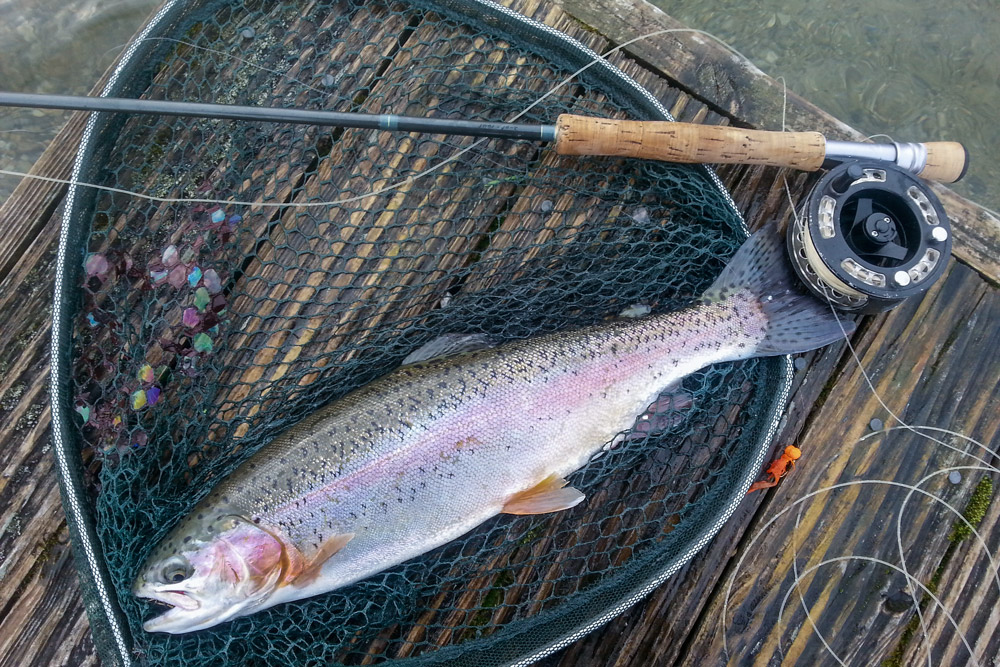
There is a large variety of colours and textures to modern day blob materials. For the basic blob pattern, use simple blob fritz, tie the core of the fritz on the hook above the bend and as you wind up the fritz in touching-turns, make sure to pull back the fibres as you go so the finished fly has all the fibres leaning back away from the eye of the hook. I also find that using a nice bright thread for the head adds an extra hot spot for the fish to attack. You can also add in a second colour fritz to your fly, a tail of your choice or a pair of booby eyes, all giving you a variety of looks, shapes and colours that may attract feeding fish.
Lures
Pulling lures is another approach that an angler can take to catching winter rainbows. The choice of flies that you can choose from for this method is very extensive. The list includes minkies, damsels, leeches, cat whiskers, large wet flies and a host of flies (beaded or not) with marabou or zonkers tails in every colour under the sun. However, for the purpose of this article we will focus on fry-imitating minkies. In the majority of stocked fisheries around the country, small fry and minnow make up a fair proportion of the fishes diet. Correctly fished, this method can be devastating but there are some key points to note when choosing to pull fry patterns.
“One of the most important aspects to a good fry pattern is it must have movement; not just how you move the fly through the water with your retrieve, but it must also wiggle or pulse because of long loose tails or fibres that make up the fly”
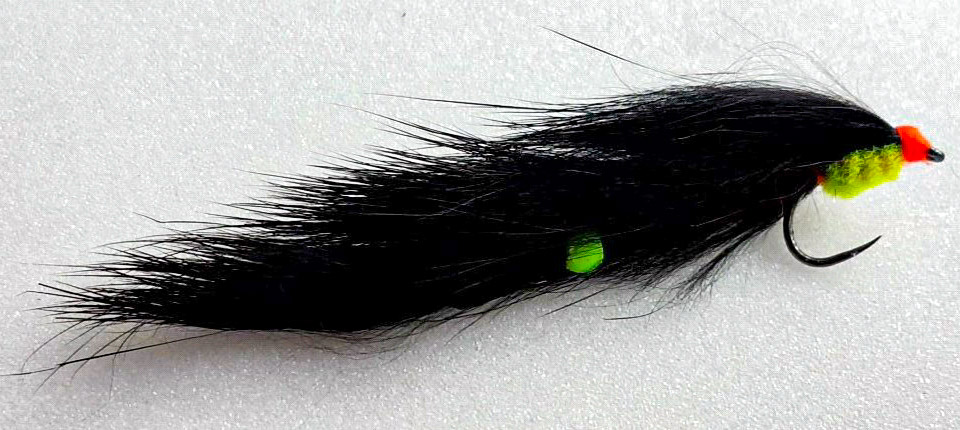
One of the most important aspects to a good fry pattern is it must have movement; not just how you move the fly through the water with your retrieve, but it must also wiggle or pulse because of long loose tails or fibres that make up the fly. For this reason, the most popular materials used to dress these flies is rabbit zonker strips. When wet, the soft, long hair fibres will move and pulse through the water as you retrieve it, giving it the look of natural bait making its way along. This movement also acts as a trigger for the fish and may encourage an attack when it is following the fly. The soft skin that holds the fibres together is also strong enough so that when the fish pluck at the end of the fly (as can often happen) it won’t simply fall to pieces and will last for more than one attack. Once again, finding the fishes depth is crucial and the speed of retrieve will also be the difference between catching or not. So, to begin with, start at a chosen point or depth and work from there till you find the right speed and movement. Remember that mixing up your retrieve will not only get the speed right but it will also affect the movement of your fly.
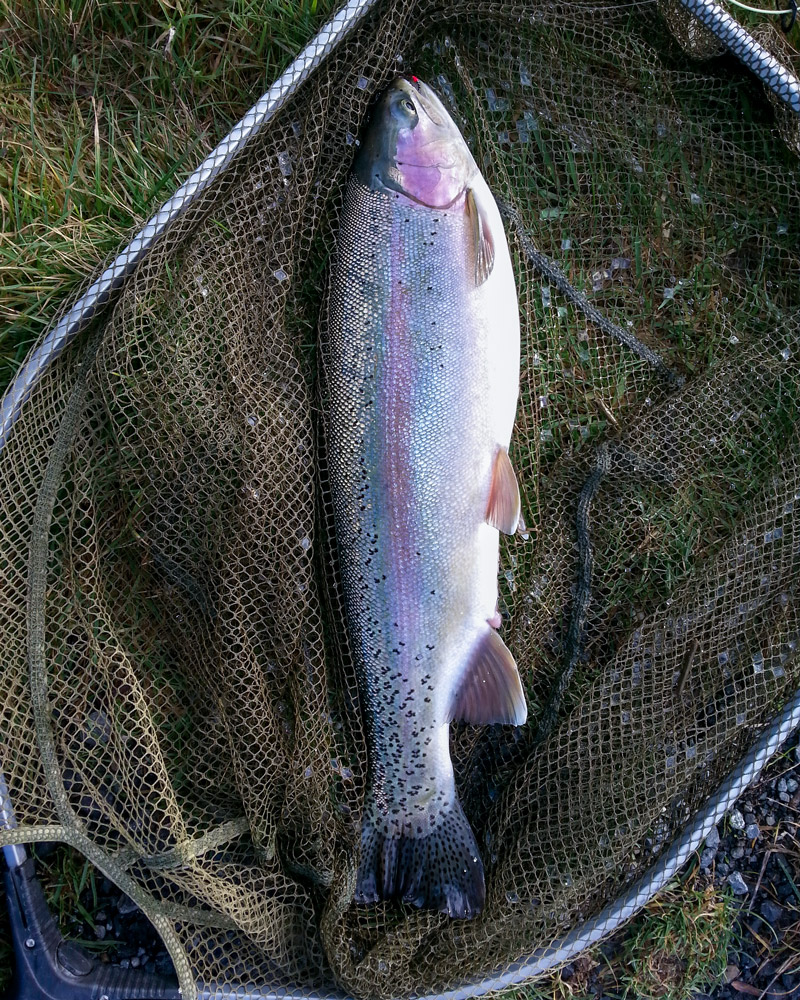
Once you feel you have discovered the right depth and speed, fan out your casts to cover all the areas of the lake in front of you, starting near the bank to your left or right. This location is popular for roaming trout looking for small fish and stripping along the margins can be very successful. Remember to remain low and out of sight as sometimes the fish will follow the fly right in to your position and if you are standing up you may well spook them before they have a chance to attack. Another good feature to watch out for is shelves under the surface, where it drops off to from shallower and deeper water. Of course, you always have a marginal shelf of some description but there are usually drop-offs and shelves out in the lake as well. This location is again a good spot for roaming and feeding fish and a well presented minky can have good results here also.
There is, however, a constant issue some anglers have with fishing minkies and that is ‘tail bites’. This is when the fish follow the fly in and nip at the long fibres of the tail not resulting in a hook up when the angler strikes. To remedy this problem we see the introduction of what is now known as the snake design; a long minky pattern with initially two hooks in the tying. The two hooks are connected with either fine braid or strong monofilament, the tyer’s choice. The long zonker strip is then attached to both hooks and the hook nearest the head of the fly has its bend and point cut off. So now, when stripping in the long minky and the fish nips at the tail of the fly, the second hook is right at the rear and this will result in more hook ups for the angler. Unfortunately in a lot of competitions this fly is not allowed, so when fishing long minkies you must remember to keep retrieving when you are getting tail plucks and only lift into the fish when you feel the full weight on the line. Sometimes I can get three or four plucks on one cast before hooking the fish but I never strike, I keep retrieving at either the same pace or a little faster, waiting until the fish chasing it has had enough and decides to attack.
When tying your fry patterns, another good tip is to use bright cheeks or glo-brite heads as this shifts the attack point for the fish to higher up the body of the fly, which will result in more hook ups. We also have variations of the standard style of minky that are worth a try. Bunny leeches are of the same concept but have a bright plastic floating bead threaded up on the zonker strip in the tail to give a different movement to the tail of the fly as it swims through the water. Also, you can add in double tail, side by side, to create even greater disturbances in the water. Again you can add bead heads, twin eyes and booby eyes to the head of the fly which in turn will give different actions to the finished fly.
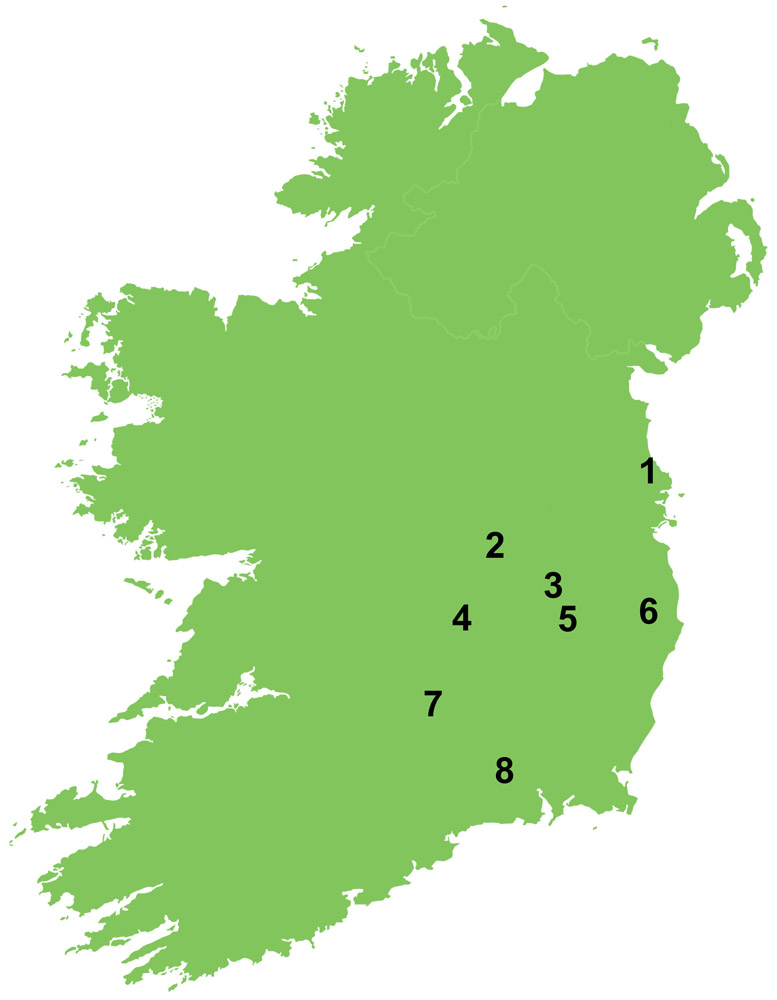
Peter’s recommended stocked trout fisheries
- Courtlough Trout Fishery, Balbriggan, Co. Dublin
- Lough Aisling, Edenderry, Co. Offaly
- Curragh Springs Fishery, Curragh, Co. Kildare
- Laois Angling Centre, Coolrain, Co. Laois
- Rathcon Lake, Grangecon, Co. Wicklow
- Annamoe Trout Fishery, Laragh, Co. Wicklow
- Lough Doire Bhile, Glengoole, Co. Tipperary
- Ardaire Springs, Mooncoin, Co. Kilkenny
Tackle
For me, the tackle generally I use is either 6, 7 or 8 weight, ten foot rod. I personally find the Syndicate line of rods to be great. The rod I choose at any one time will depend on the wind, the line I wish to fish, the method I am fishing and even the size of tippet I need to use. Another aspect is how far out the fish are in the lake, and how far you need to cast. Sometimes, on some fisheries, the trout can be congregated in the middle, away from bankside disturbance, and it may often require long distance casting. With this in mind, one piece of advice I give all bank anglers would be to get a lesson or two on casting; it will increase your catch rate, enjoyment of a day on the lake and save your arms from a lot of punishment – it is well worth it. Of course, if you are paying your hard-earned money for a day’s fishing on a stocked fishery I think most of us would rather catch as many as we can and justify the price of the day ticket, which means being able to cover all eventualities if needed, including distance casting.
“Sometimes, on some fisheries, the trout can be congregated in the middle, away from bankside disturbance, and it may often require long distance casting”
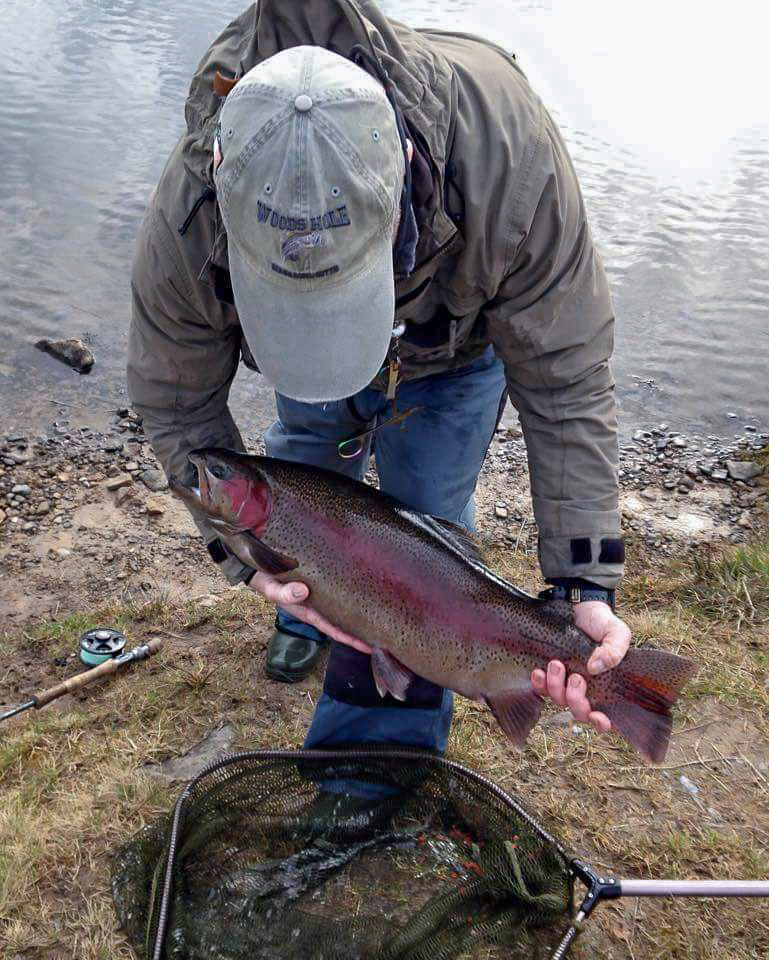
Tippet wise, Grand max Soft Plus is a huge favourite among bank anglers. It’s expensive but as fluorocarbon goes, it is good. However, I have often seen the low-cost monofilaments do the job also so my advice here is to use what you are confident to begin with. Add to this a good pair of polarized glasses to protect the eyes, warm clothes and a flask of tea and you’re all set. A hand towel is also a nice comfort, so when you have released a fish back into the water on chilly days you can dry your hands and save the cold setting into the bones.
Like any discipline in fly fishing you must find what you are confident in using and doing. Once you have that, your flies will always have a chance of a fish. But remember, when you find yourself wading through boxes of colours, fritz’s, marabou, zonker strips, nymphs, lures, booby’s and God knows what in your fly boxes looking for the answer to catching a fish, always bank on the basics.
Peter Driver
To learn more about how Peter fishes his blob flies please see here