

Not just a Summer species – early season tench
Issue 3 (Apr-May 2015) Bill Brazier with Jason Summers


In many respects the lake still looked bleak after its winter endurance. The marginal weed had yet to take hold, the surrounding trees were still bare except for some struggling willow blossoms and the reed beds remained a lacklustre gold. Although spring was underway, it was unmistakably still early for our chosen quarry – or was it?
Our intrepid angler, Jason Summers, disagreed and had been disproving and dispelling the myths around when exactly tench season began for weeks now. Many fish had fallen to his rods in March and even as far back as mid-February this year. This is a trend that Jason experiences annually even though the vast majority of coarse angling fans wouldn’t dream of dedicated tenching until at least after Easter. Even then, most still perceive ‘Old Red Eye’ as a summer species, when anglers target them in weed-choked margins on misty dawns. “The tench are still there in the colder months”, clarifies Jason, “they don’t just disappear! ” Whilst their activity is certainly reduced the tench still need to feed, even through the winter. “I think the main reason people don’t catch tench outside of the traditional periods is that they simply don’t fish for them, and even when they do their tactics and timing is often incorrect”. Jason is a tench fishing addict and has honed his skills and gathered his extensive knowledge through countless trips over many years.
I arrived at our chosen venue two nights in to Jason’s three night stay. He had already managed to tempt six early season tench to a weight of 4lb or so. The fishing was good but predictably intermittent given the impending weather change – a large area of high air pressure with slackening winds was moving in over the country – yet his tactics were still catching. I guess many anglers today, regardless of discipline, focus primarily on rigs and terminal tackle when trying to understand an anglers’ extraordinary catches. And whilst Jason’s rigs were well thought-out and undoubtedly effective, they were, in his own words, “nice and simple”. Most of his tenching is done behind two rods on bite alarms, especially early on in the year. It makes the (sometimes long) wait for bites infinitely more bearable. Float fishing is usually employed after spawning in the summer, when short dawn and dusk feeding spells lend themselves to short sessions.
To aid presentation over a range of lake beds, Jason utilises ‘helicopter’ or rotary rigs, which almost eliminate tangles on the cast and, as the lead or swim feeder hits the bottom first, allows the hooklink to settle gently on any substrate. I am sure many specialist coarse anglers will cringe at the thought of placing bait directly on the hook, but this is what Jason favours for maggots. “Not every rig has to incorporate a hair!” he insisted, as he nicked two maggots and a caster onto a size 12 hook. For added strength and security, the hooklink revolves around a short leader of heavier mono or fluorocarbon, or even leadcore. Incidentally these same principles are incorporated into many mainstream sea angling shore rigs.

Given the choice, Jason will invariably use maggot feeders (40-60g) and maggots as the bait on his short 3-4” mono hooklinks. “Tench love maggots and they are easily the most effective bait. Once the fish get switched onto them they will actively seek out every last one, and wait for more!” And it is that impatience that is so vital to encourage in the fish, for this is when the tench (indeed most species) will become aggressive and care-free in their feeding. This makes them a whole lot easier to catch. “When fishing with maggot feeders you have to work at it, you need to be active and recast frequently to top the swim up. Tench are very curious creatures and a splash followed by bait falling through the water column is often very hard for them to ignore” explained a determined Mr. Summers.

The day and evening had turned out lovely, with little wind, blue skies and strong sunshine. Yet, as pleasant as it was sitting beside the lake, watching nature, drinking tea and quietly listening to the football on the radio, Jason still consistently made the effort to recast his rods and ‘work the swim’. As in most angling, feeding is key. “It’s no good casting out a feeder or PVA bag full of maggots and leaving it there all day. That’s a very ineffective, inert way of fishing. Smaller fish will eat the bait too, remember.” To this end, Jason periodically added more bait to the swim throughout the afternoon and evening with a Spomb. It was clear that accuracy was high on his list of priorities. Both lines were marked with pole elastic at the desired distance, and the Spomb’s contents fell directly over the hook baits too, thanks to the use of the reel’s line clip.
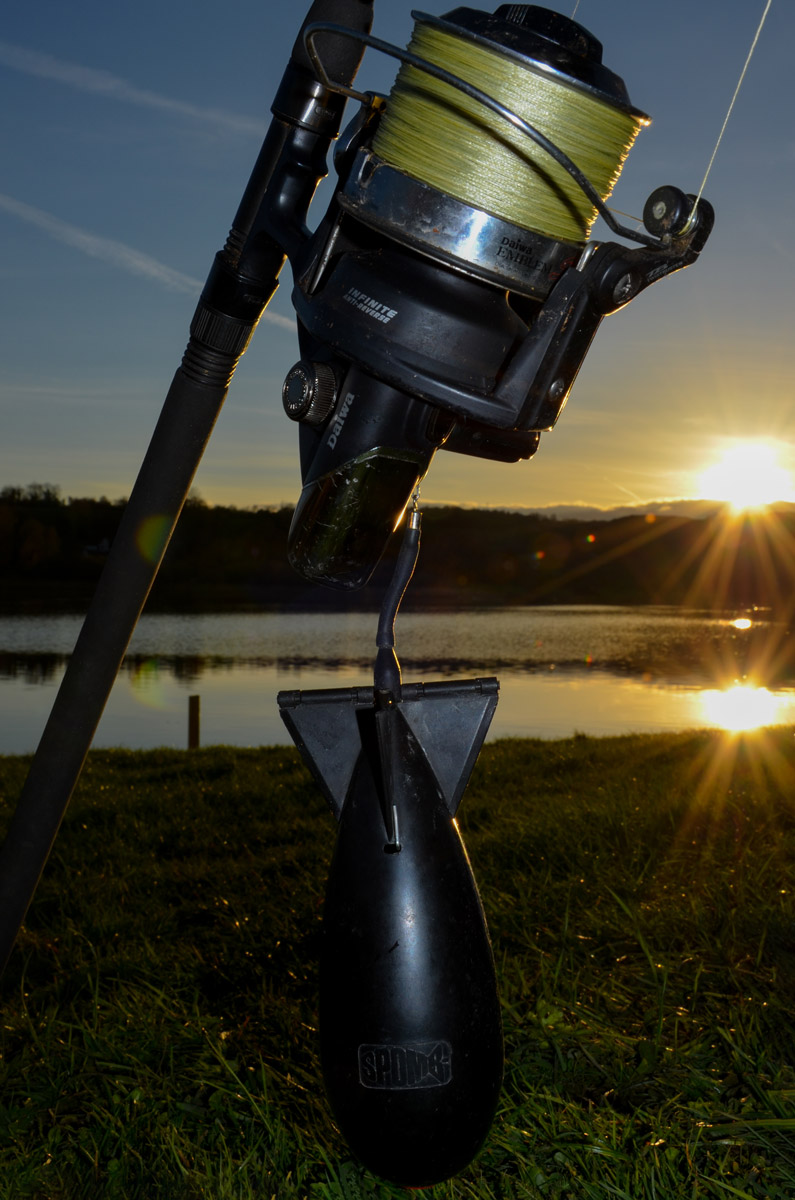
“Through the winter and early spring, tench are in tight groups. I guess as there is little weed cover for them to hide from predators in. I have found that many fish won’t stray far from the group, so if you are on fish with one rod and the other hookbait is too far away you might not catch anything on that second rod.” This explained why Jason fished both rods within 5 yards of each other on this session.
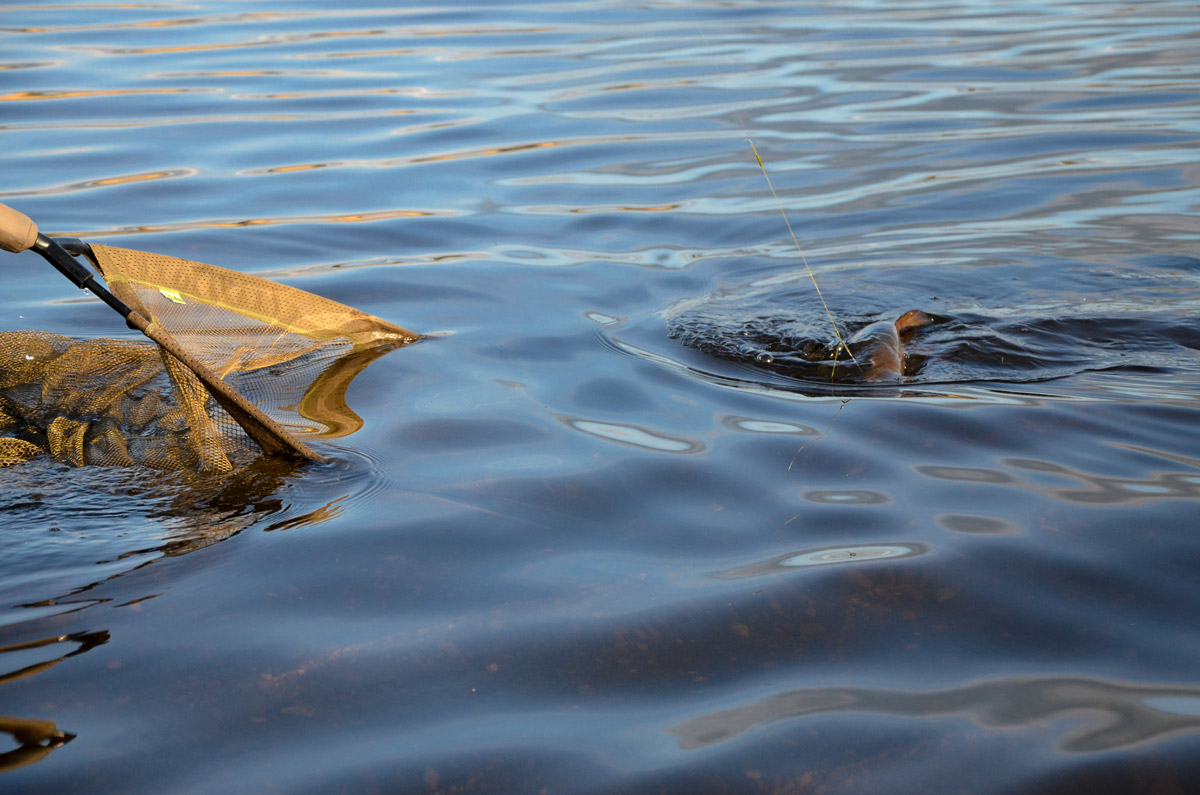
At around 6pm, after hours of wondering just when or even if the tench would feed next, Jason’s left hand alarm signalled a pretty violent bite. We dropped our tea mugs and Jason grabbed the rod and me the camera. The tench put up a short but spirited scrap on his exquisitely balanced set up, small reels loaded with robust 10lb mainline and a light, through-action rod of 1.5lb test curve. Seeing that little red eye and paintbrush-like tail break the surface and glide into the waiting net made me wish I had devoted more of my time to fishing for tench before the usual late April/early May period. Jason’s reward for a hard day’s work was a beautiful female of some four and a half pounds. She had been through a few battles, with evidence of a previous pike attack when younger. Like many early season tench this one was dotted with small red blotches. We both agreed that this is typically caused by stress and perhaps leeches during the winter months when tench can lie dormant for long periods of time.

Shortly after returning the female, Jason’s other rod was away and after another good fight an average sized pristine male tench was posing in the early evening sun for the camera. I was incredibly excited at the prospect of a feeding spree and managed to get my own baits in the water – well, it would have been rude not to! Even Jason shared my optimism for a couple more fish before dark (which is generally unproductive on most waters at this time of year) but although we waited expectantly, no more action came our way. The day ended with a glorious sunset though and we were both delighted to be by the water, sharing our passions for angling.

Despite chatting about all things fishy until quite a late hour, we both got some decent sleep under the clear skies before awaking at 5.30am, well before first light. No bites developed during darkness, not even from a bream or hybrid. Jason re-baited and re-cast with pinpoint accuracy before settling down with a cup of coffee to watch for signs of rolling tench. His enthusiasm and dedication are an example to all anglers. Beginning in February and ending at the start of autumn (when his attentions turn briefly to other species like bream or carp), rarely does a day go by when he isn’t either fishing or at least pre-baiting and watching tench waters. “I often go down to some of my favourite small loughs without rods, and just sit there, waiting to catch a glimpse of a big tench, trying to work out their patrol routes and feeding patterns.” He frequently prepares swims and fishes before going to work – something very few would have the drive to do.
It is little wonder that Monaghan-based Jason Summers has caught so many large Irish tench. For those interested in facts and figures, this is a man who has, at the time of publication, landed an astonishing 49 tench over 7lb and no fewer than five fish over 8lb. His personal best is simply mind-boggling. Incidentally, Nick Parry’s long-standing Irish record tench weighed 8lb 2.25oz. Clearly, Jason is an angler not interested in the spotlight or records, rather one who simply loves doing what he does.
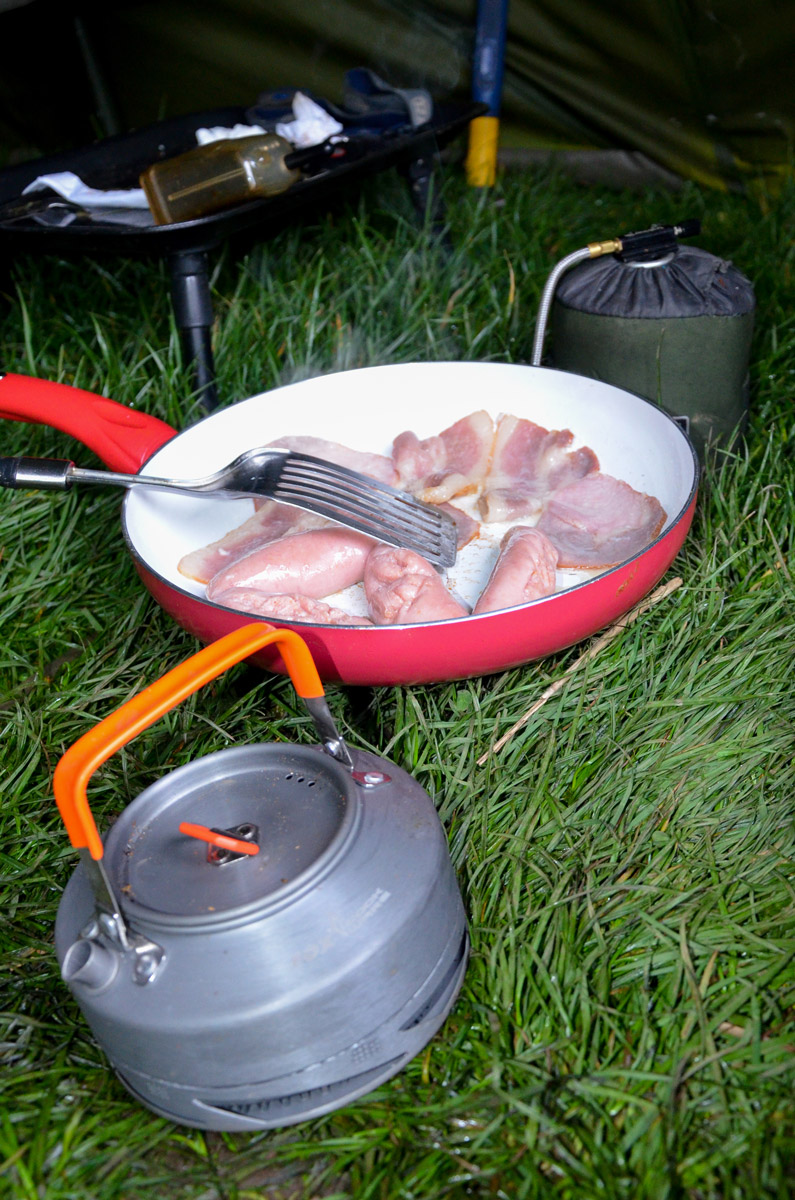
“Tactics, methods and baits for early season tench are all well and good but what about the choice of venue?” I ask the main man over a feast of sausages, rashers and eggs. “Of course,” Jason replies “not all waters are the same. Some are much deeper and take longer to warm up early on. Some have major inflows [rivers] which cause the water levels and temperatures to fluctuate more. Some are shallow and reach a higher temperature more quickly, and produce more weed and natural food as a result. It is the shallower lakes and ponds I look for in late winter/early spring.” I ask him to define “shallower”. What depth is he typically looking for? “Just into double figures is good starting point, 10ft+. Tench tend to shoal up when there is little weed about, for protection. They are unlikely to venture into very shallow water (although warmer) for this same reason. I suppose a decent depth gives them the best of both worlds – fresh weed growth, natural food and shelter.” However, Jason was keen to point out that “this is angling and there are no hard and fast rules. On paper a water or a swim might look great, but in reality it may not produce tench in any numbers until more traditional times.” The moral here is that there is no substitute for experience and effort.
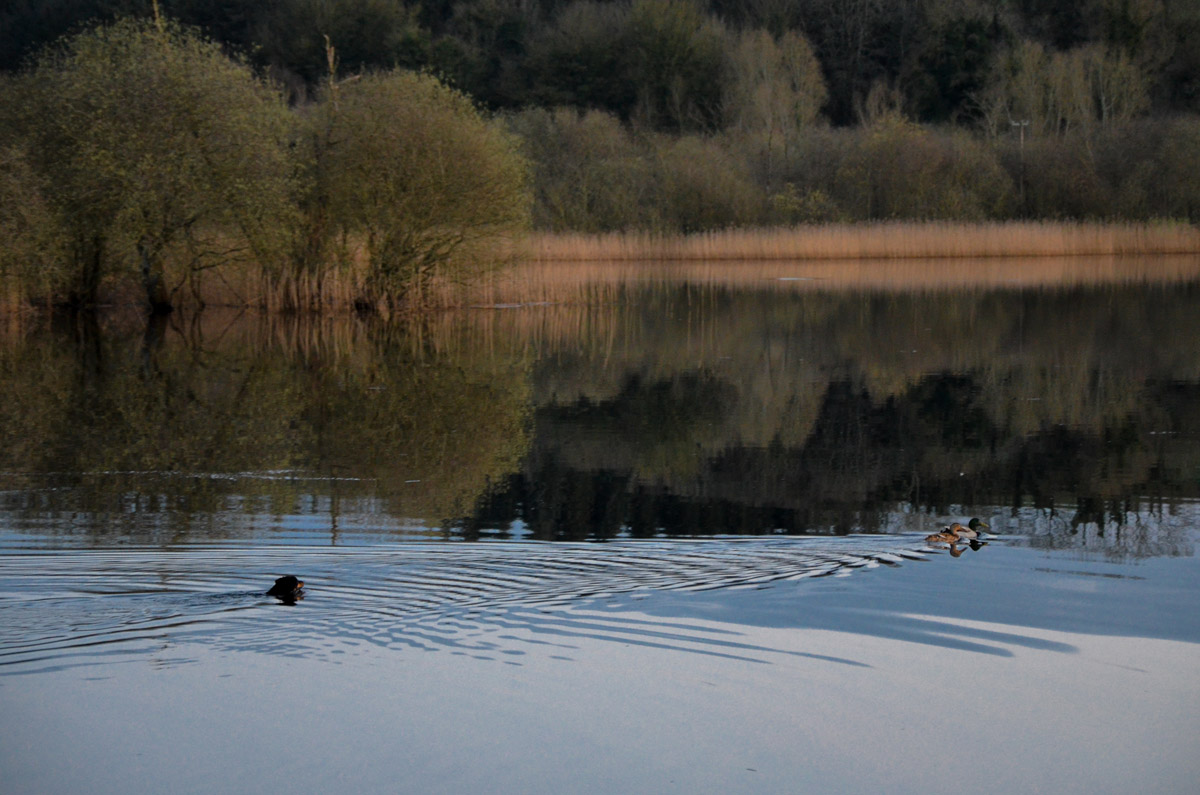
We saw a couple of tench roll at first light over the baits and we were both confident of a bite or two before the sun burned through. However, it didn’t happen. Still, all was not lost. It was a spectacular spring day – cloudless, calm and very warm – a pleasure to be out in, whether we caught any more fish or not. We witnessed small pike spawn in the flooded margins, saw a biplane fly overhead, spied many different types of birds diving and defending their patches of water, watched a dog swim perilously after a pair of mallards (!) and made plans for the rest of the season. The dramatic weather change had ended our chance of bagging another few tincas but, as Jason reassured me, “its only April, there’s plenty of fishing to be done yet!”
