
Irish carping – it’s all relative
Issue 4 (Jun-Jul 2015) Bill Brazier
Ever since I caught my first one by accident as a youngster, carp have been my most-loved fish. This was long before Irish carp fishing was trendy and also before the seemingly endless procession of books, DVD’s, magazines and even tackle companies devoted solely to the species. My obsession was borne out of sheer fascination for what, at the time, was a comparatively rare fish in Irish waters; at a time when the average coarse angler on the bank would struggle to name more than half a dozen lakes containing carp on the entire island. More did, of course, exist but the vagueness and secrecy surrounding their whereabouts meant tracking them down was like trying to complete a jigsaw with most of the pieces missing! But that was all part of the fun…
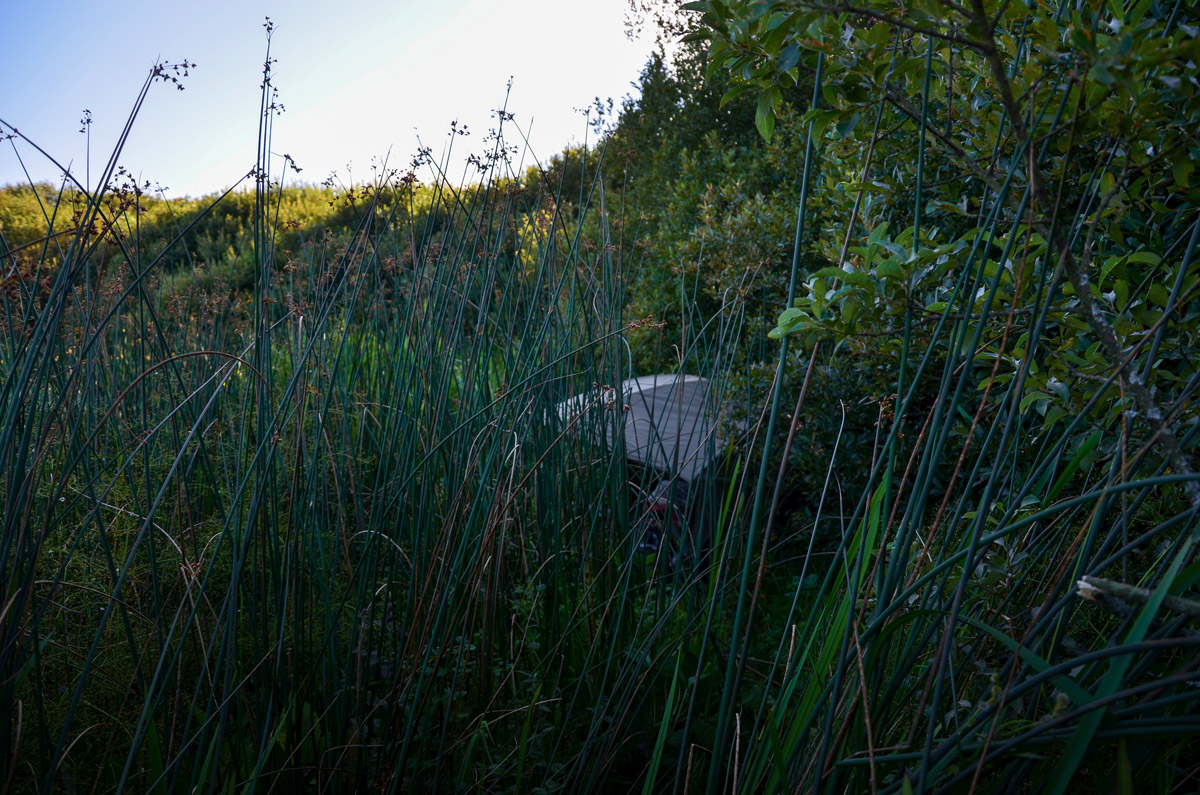
Fast forward almost twenty years and a lot has changed in Ireland, not least the fishing. Carp now seem to be appearing all over the place in low numbers and there are an increasing amount of commercial fisheries with high densities of the fish. Most Irish coarse anglers have seen and often caught carp by now – they are infinitely more accessible than they once were. So, am I saying this is a bad thing, do I lament the ‘good old days’ of Irish carp fishing where we had less carp and less carp waters? Is it a case of recollecting through rose tinted glasses? No, not necessarily, for, in my opinion, there is so much mystery still attached to the majority of carp in Ireland and that is, largely, what drives my angling as a whole.
These days I would like to consider myself an all-rounder, not a particularly competent one but an enthusiastic one nonetheless. Coarse, game, sea – the tags most anglers insist on using to divide our beloved pastime – are all practiced avidly, but carp remain my favourite. The one fish that, if given some preposterous, hypothetical ultimatum, I would try to catch above any other for the rest of my days. However, I can almost hear many uttering, “in Ireland, why bother with carp?”.
For the unfamiliar, carp, as a species, have been present in Ireland in one form or another for centuries – at least since the early 1600s, if not before. Our contemporary stocks largely derive from populations whose ancestors existed in the early to mid-1900s. They have persisted in the wild in various locations, both naturally and with the help of human movements, with the sole purpose of surviving to an age at which they can reproduce and spawn the next generation. Unlike practically every other country containing carp, no dedicated breeding programmes have ever been conducted in Ireland to encourage faster growth rates or larger ultimate sizes – what is termed scientifically as ‘artificial selection’. The carp have been pretty much left to their own devices and in nature, achieving big weights (such as those we are bombarded with from the UK media on a daily basis) is not an advantage. All that matters to them is to grow to a size at which they can avoid predation and then breed. This is what wild creatures are programmed to do. Of course, there are other reasons why the vast majority of carp in Ireland struggle to reach weights above 20lb – a home-grown ‘twenty’ still being a dream fish for most carp enthusiasts. Genetics play a large role (which is what is manipulated and altered in a stock of fish through artificial selection), as does environment and climate.
“Unlike practically every other country containing carp, no dedicated breeding programmes have ever been conducted in Ireland to encourage faster growth rates or larger ultimate sizes”

As already touched upon, being our immediate neighbours and unarguably among the carp capitals of the world, Irish anglers are acutely aware of the fact that most coarse species (especially carp) grow far larger in England and mainland Europe. With the advent of social media, in addition to the more traditional angling press, one cannot avoid seeing pictures of men and women holding up carp of 30, 40, 50, hell, even up to 80 or 90lb carp on an incredibly regular basis. Sure, this is mesmerising – after all one of an anglers best qualities is dreaming of that monster fish – but there is no doubt that it presents a grossly exaggerated version of reality, particularly for anglers based in Ireland. Quite simply, carp do not grow as big in Irish lakes and ponds as they do in England or France, and it is completely ridiculous to compare the two. Any angler who catches an Irish carp and is disappointed at its size in relation to its overseas brethren should, I think, re-evaluate why exactly they are targeting carp (or any fish for that matter) in the first place.
I try to look at life in general as objectively as I can and my world of fishing is no different. A defeatist or an angling pessimist would look on carp fishing in Ireland as a waste of time because the carp are too few and too small to warrant a second look. Why bust a gut to fish an Irish lough for session after session to ‘only’ have a meagre double figure fish as your prize? However, the optimist, or more precisely the realist, sees beyond mere pounds and ounces and perceives the carp in Ireland for what they are – another beautiful, mystical fish. It doesn’t matter how small the carp is compared to anywhere else because it is what it is. The old angling adage of ‘you can only catch what’s in front of you’ rings true here. Incidentally, it is worth noting that Irish specialists who target other coarse species such as bream and tench, both of which grow to literally twice the size in England, rarely, if ever, complain or worry that their catches don’t measure up in contrast…
“Quite simply, carp do not grow as big in Irish lakes and ponds as they do in England or France, and it is completely ridiculous to compare the two. Any angler who catches an Irish carp and is disappointed at its size in relation to its overseas brethren should, I think, re-evaluate why exactly they are targeting carp”

Again, I’ll stress that when talking about carp fishing in Ireland we need to be objective. I have been very fortunate in my life to have fished some truly special waters around the country in search of Cyprinus carpio, catching by design from almost thirty venues and counting. Lakes where the only company you may have for a whole year worth of trips amounts to the local farmer and the wildlife sharing the water with the fish; lakes where the fish have no names; lakes where the weights of the fish aren’t recorded in a log book and aren’t known before the carp is even in the landing net; lakes where the carp have survived for years and years on natural diets and where there exact numbers are complete conjecture; lakes where the carp are often uncaught or rarely captured, immaculately conditioned and look like they have been carved from a piece of wood. There can be little doubt, we are truly blessed with some of the best looking carp in the world. Where else, I ask you, would you be able to find such unknown and unspoilt carp fishing in this day an age? Not many places, I assure you.

With many of the above in mind being a reality on a great many venues around Ireland, does the weight of the carp truly matter? Not to me it doesn’t. Sure I love the thought that the next bite could be from some unseen Leviathan, and purposely fish some waters where this is a possibility, but often it doesn’t diminish the experience if such a creature fails to materialise. Every venue is different and should be treated as such. Is catching 20lb carp from a lake with lots of twenty pounders any more of an achievement than a 10lb’er from a venue with very few doubles? As I said, you can only catch (or try to catch) what is in front of you.
One particular lake I have fished on and off since childhood contains just twenty or so carp in nearly ten acres of rich, weed-filled water. From years of observation (and some captures!) I am fairly sure that only – only! – two or three fish over 20lb swim there, but that does not detract one bit from enjoying my fishing. They are the biggest carp in that lake, and are still, nationally, large carp. Most notably of all though is that they are extremely hard to catch, regardless of size, and offer an incredibly rewarding challenge. Surely this is one of the most important aspects of fishing – the thrill of the chase?
Another venue I have fished a great deal in the past has never produced a bona fide twenty pounder – a common characteristic of many lakes in Ireland. However, the fishing is hard due to a low stock of fish, high natural food levels, profuse weed growth and poor bank access, also a common trait of Irish lakes! The carp though are as wild as any in the country, born and bred in their natural environment and invariably look absolutely fantastic. Despite landing many the mystery is still there though and some of the stock is still uncaught due to a lack of angling pressure. Seeing a rather large common (once and only once) just yards from me in shallow water a number of years ago, which could not have weighed any less than 25lb, is one of the memories that keeps my love affair with Irish carp angling alive and kicking – the unknown.

And it is this unknown quantity that Irish carp fanatics should treasure, not castigate, in my view. Take Inniscarra Reservoir in Co. Cork for example. Over a thousand acres of water with an unknown amount of carp to an unknown size, quite possibly over the existing Irish record and most people’s personal bests, with very little carp angling presence. If this water was in the UK, for example, it would be cherished as the last great frontier of carp angling, as would many of the other venues dotted around Ireland that harbour carp, most of which are untapped and unknown. Anglers in the UK, if the ones I know are anything to go by, are crying out for waters such as this, and we have them in comparative plenty. Sure, the physical size of the fish may be much smaller but the carp fishing experience is surely greater?
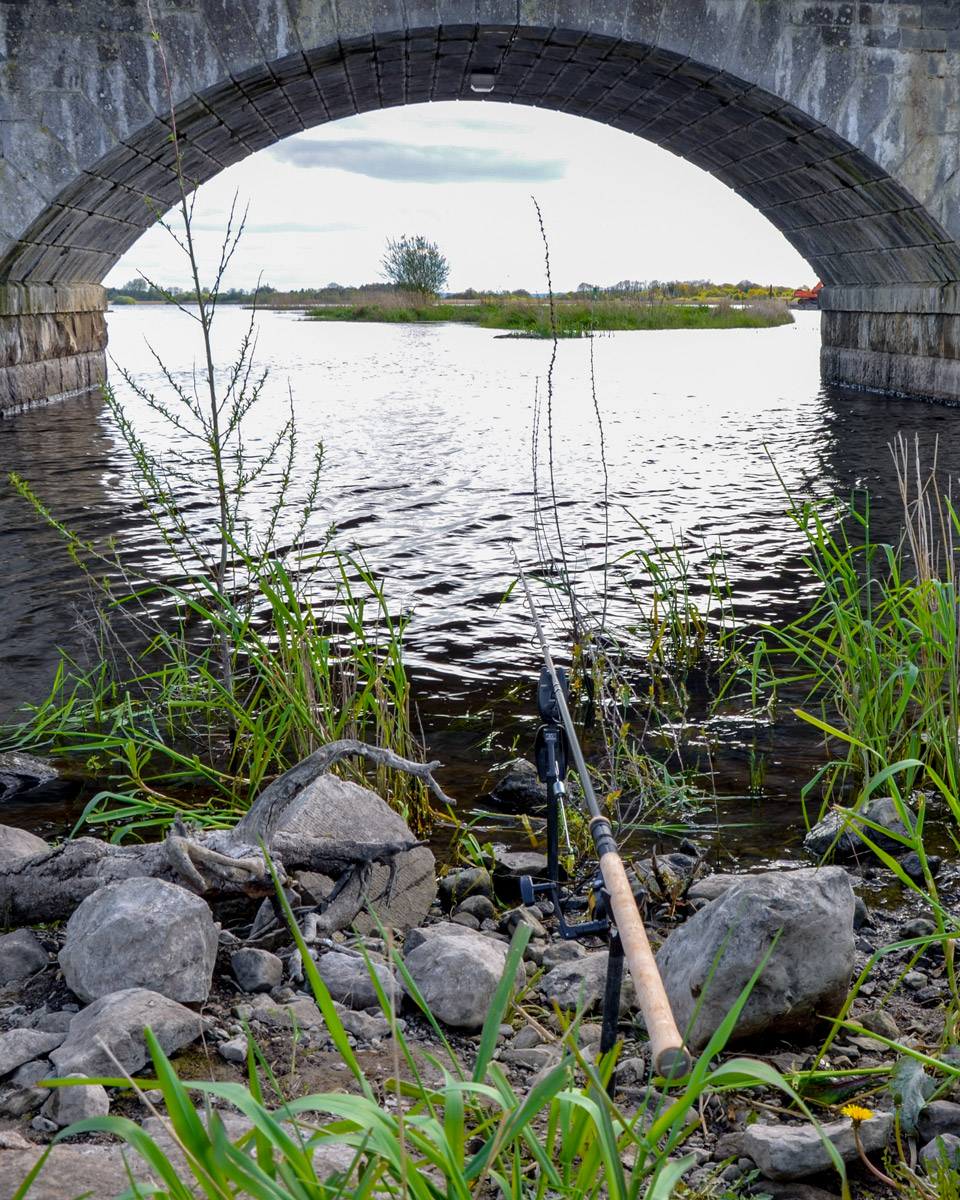
Please don’t misinterpret; I am not bad-mouthing UK or modern carp angling scene, just stating some home truths. I realise that there are waters in every country that are secret, unfished, unpressured and allow anglers to fully immerse themselves in a true angling Nirvana. We are just fortunate in Ireland to have more of them than most. I am also not insinuating that we should all be happy fishing for 10lb carp forever, far from it. Presently there is an increasing number of club-controlled waters around the country which are beginning, through sound fishery management (something not really ever applied by the authorities to Irish lakes containing carp), to produce bigger and bigger carp. The same can be said of Northern Ireland, too. The more recent importation of a new strain of carp from England (Carp4Restocking ) will undoubtedly see regular carp captures from selected lakes exceed the 30lb barrier in the near future – due not only to the aforementioned improved management but also as these carp have been bred specifically to grow fast and to grow big! Fortunately, Tony Campbell and co. have chosen to produce carp that both grow well and look simply incredible. Meadow Lodge Fisheries, near Maynooth, Co. Kildare, one of Ireland’s most popular carp waters, have a stock of French carp which have bred and grown at their lakes and these fish are also developing quickly and attaining impressive weights – some are real lookers also!

For sure, we are at a turning point for Irish carping. Carp will get larger, be they Irish, French or English strains, or crosses somewhere in between. Undoubtedly, in parallel with the rest of the world, fishing for carp will continue to increase in popularity, as will the number of lakes providing good sport. Whether we ever see carp grow to the sizes of their cousins or become as easily accessible as elsewhere remains to be seen, but, please, I suggest you keep one thing in mind about Irish carp angling – it’s all relative! You can only catch what’s in front of you.
Bill Brazier
For a detailed look into the fragmented history of carp in Ireland please consult Brazier et al. (2012) ‘A History of Common carp (Cyprinus carpio) in Ireland; a review’ at the following link: http://oar.marine.ie/handle/10793/811