Structure your wrasse fishing
Lure aficionado Steven Neely explains all about ballan wrasse fishing on lures and how his approach to the species has completely changed in recent years
Issue 4 (Jun-Jul 2015) Steven Neely


Shallow water, boulders, weed and gullies – sounds like the last place you want to throw expensive, highly advanced lures into doesn’t it? Well, ballan wrasse love it! For years, people always looked for deep water marks to present crabs, limpets or worm baits to tempt these hard fighting reef fish but the art of modern lure fishing has thrown all this out the window.
Since I moved over to Alderney recently I have had my eyes opened regarding where, when and how wrasse will take lures. Before, I was fishing the rugged west coast of Ireland which, of course, threw up some large pigs but nothing compared to this little, rocky wrasse haven in the middle of the English Channel.

So following on from my last article on the humble wrasse I thought it was a good opportunity to show you the diverse environments which these fish inhabit. Granted Alderney is a rather unique place in terms of tides and currents but I hope this may make you step back and at least question some marks which you may have previously walked past – I know since my arrival I have had to go back to the drawing board and take a fresh look at how I tackle wrasse on my lure gear.
Boulders
Without question, the best places to target big wrasse are heavy, brutal boulder fields – don’t be under any illusions, you will loose tackle but your chances of hooking a personal best are much increased. Here on Alderney are some of the biggest boulder fields I have seen and in themselves are rather formidable looking, but, once you add the infamous tidal rips and currents which the Channel Islands are famed for, it produces what only can be described as ‘daunting’ wrasse marks.
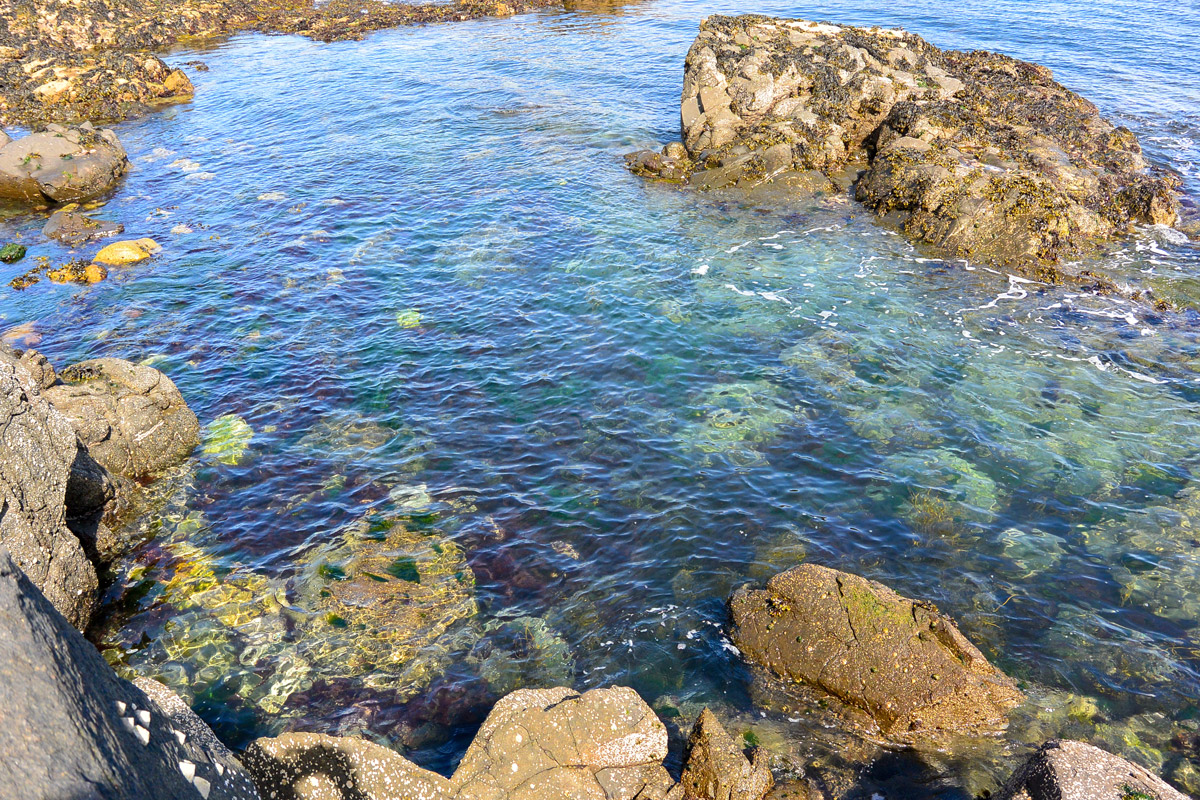
The first few times I tried fishing these marks I struggled to get my head around how any fish could actually live and hunt among the vast expanses of rocks which got harassed by gallons of water every second. But, believe it or not, the wrasse is quite at home in these turbulent environments and it isn’t until you hook one that you will realise why they need such large tails. Of all the places to hook a large wrasse a boulder field will be the most exhilarating and nerve wracking – one false move and the fish will smash you off against a rock.
The battle won’t simply be between you and the fish but also the environment will do it’s best to make life awkward – you will need to be equipped with sturdy footwear to grip on the rocks. I wear heavy rubber soled wading boots with metal studs, which are changed every season to ensure they keep their edge. It isn’t essential but I like to wear breathable waders when I go out wrassing as it gives me a little more manoeuvrability and options when fighting and landing fish.
Usually in my articles I talk about finesse and delicate presentation but sometimes you just have to realise that your target species has the upper hand and to level the playing field you need to gain the advantage. For heavier ground like boulders you may want to look at a more powerful rod, maybe capable of casting up to 35g … I know a heavier casting rate doesn’t always equal more power but many modern lure rods which are sub-8 foot and cast up to 35g tend to be more ‘pokey’. As I haven’t got a heavier rated rod currently I have gone down another root and opted for more length in order to gain leverage on the fish. So, I am currently using an 8ft 6” Illex rod which gives me a little more reach to get the line up and away from snags whilst still providing enough power to subdue the fish.

From chatting to my angling friends on the mainland I began to realise that the current over here on Alderney makes my scenario a little special, so I appreciate my experiences will differ from most but the basic principles still stand for fishing over boulders. When choosing a lure you can go down one of two routes – mimicking the prey which they hunt on a daily basis like gobies, blennies, crabs, shrimps and worms or you follow the other school of thought which is irritation and taking advantage of their aggressive nature by using paddle tails etc.
I tend to lean towards exploiting their aggression and curiosity by using lures which give off large vibrations such as shads, heavily-ribbed lures or exaggerated tails. These lures tend to be cast up current (if there is any) and worked methodically across the mark, ensuring the lure has time to fall down among the boulders where the wrasse will be lying in wait. I like to use fixed lead rigs like weedless jig heads or pegged ‘Texas’ as I feel it offers a better presentation style over free running leads. I would assume that with less current a standard ‘Texas’ set up would work well but with the strong rips I face here in the Channel Islands the fixed lead makes perfect sense as it decreases the chances of the lead trundling into a snag.
Gullies
This type of structure offers the wrasse a prime spot to lie up out of the hustle and bustle of tide, current and swell and ambush anything which dares pass its lair. These are often my first starting point when I reach a new mark. I try and locate the gullies and then begin to methodically work a lure up the edges. If you take a look at the video in this article you will see I have done exactly the same thing using a 10g weed less jig head, a Molix Sligozzo and my trusty Illex S 210 M lure rod. I have allowed the lure to sink and then begun twitching and hopping it back towards me, trying to focus along the margins where a wrasse is likely to be located under the ledges and cracks – as you will see it didn’t take long for one to have a rattle at the lure!
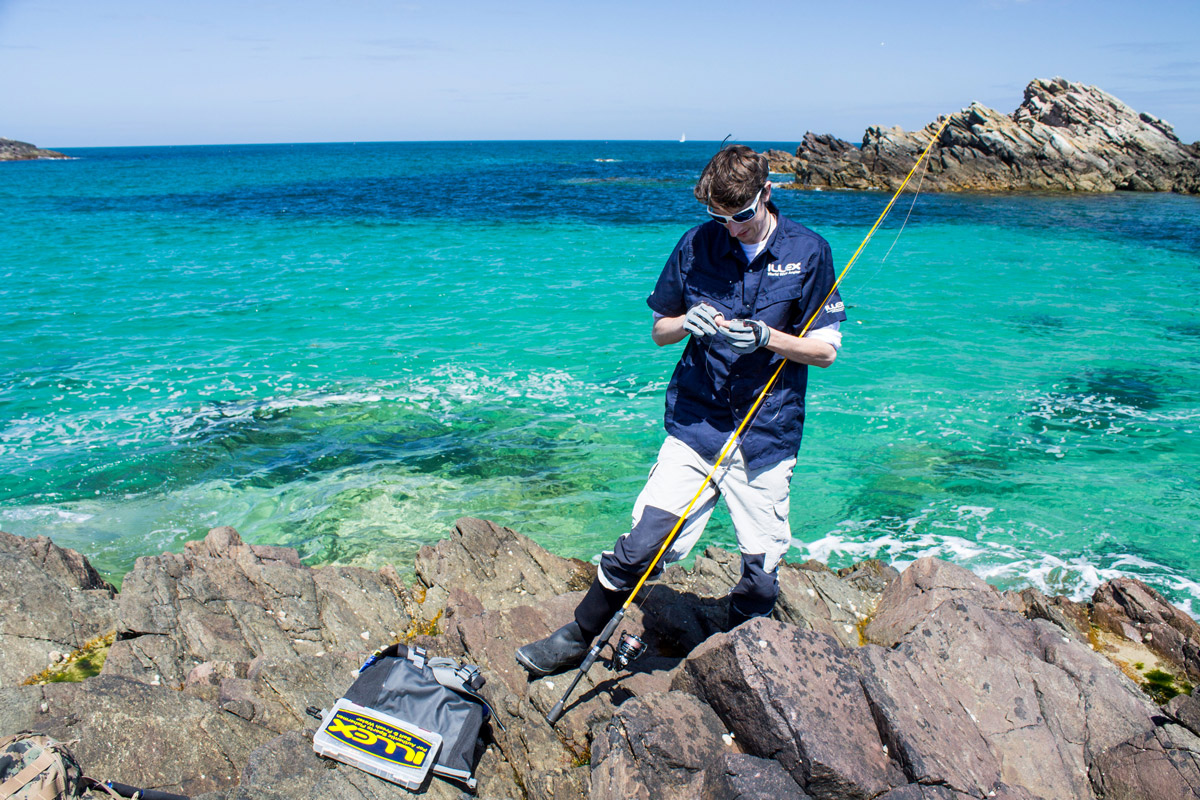
Gullies may not always be as obvious as cracks or channels at the edge of the rocks. Submerged gullies can be trickier to spot but when you do locate them, they are equally as deadly for teasing out a wrasse. The video footage will show me fishing over a small bay with a large fort in the background. Half way across there is a gully which you can see at low water. I am fishing around the top of the tide where the gully is completely submerged but a few casts over to it soon produce the goods.
Low water is a great time to get out and explore your marks as it will give an insight into what the fish are using to their advantage. Aerial photography or satellite images also help to locate gutters, gullies and ridges which you can use as starting or focus points on your sessions.
Shallows
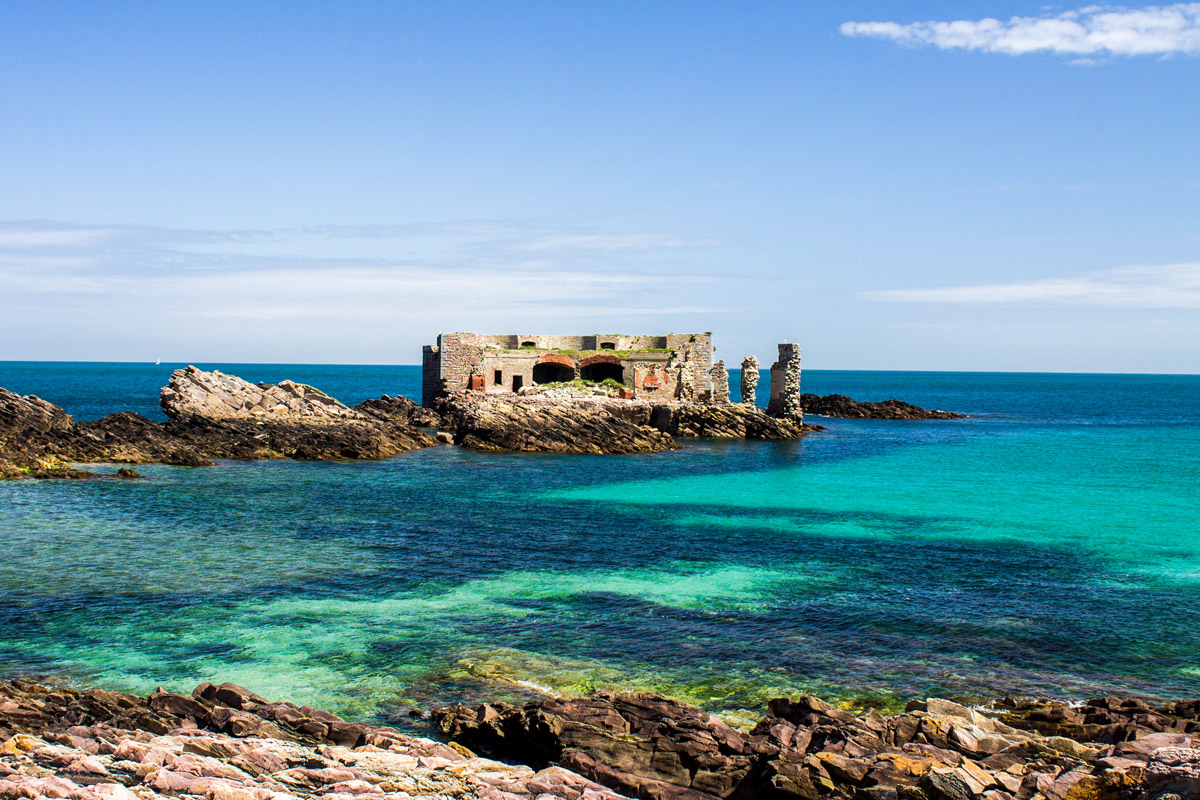
As I mentioned previously, my whole outlook on wrasse fishing has changed since moving here and if I had to choose one aspect which has been the most interesting it would have to be water depth. From my bait fishing days I always looked, like most people, for deep water – boy was I missing a trick!
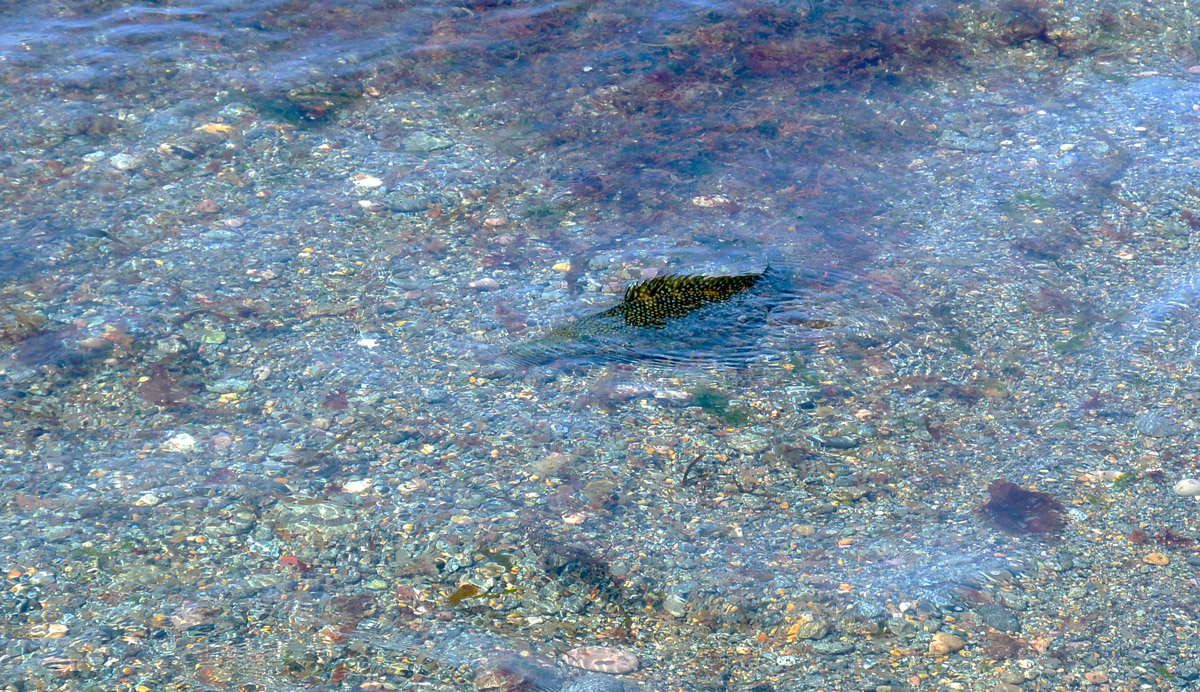
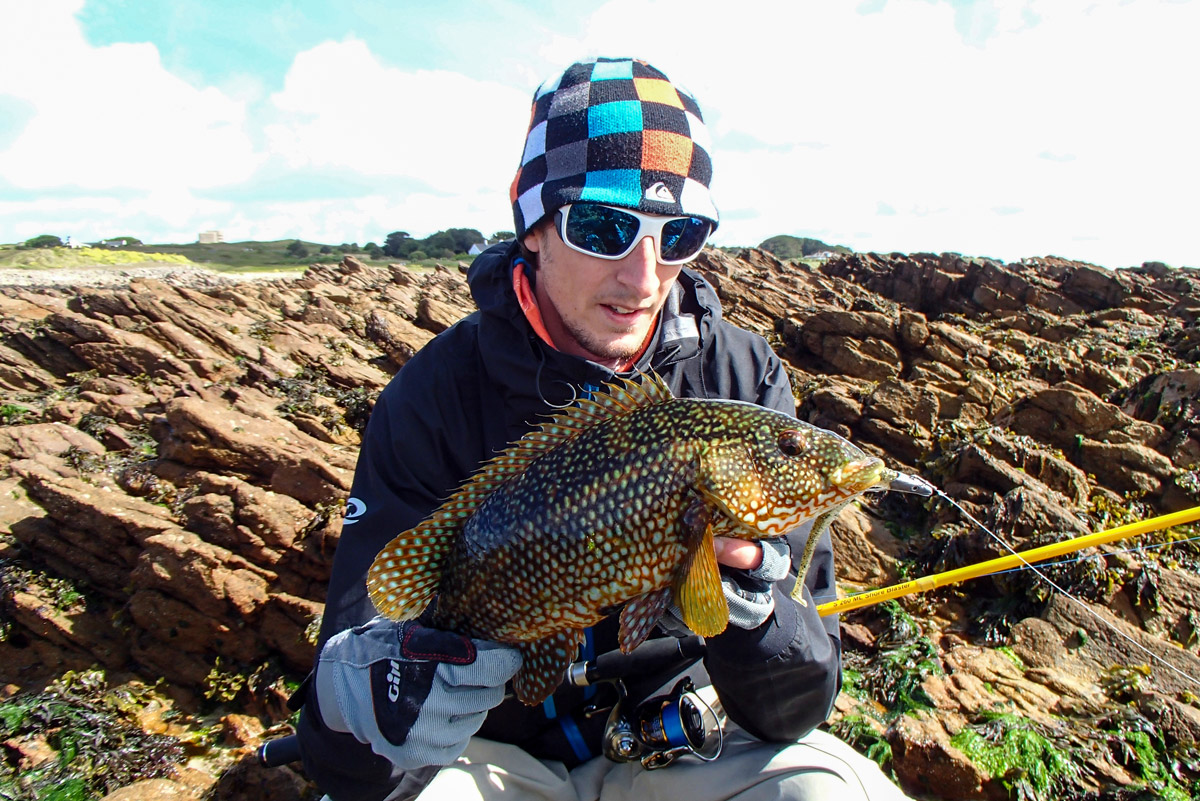
I have now nailed numerous wrasse in under 4ft of water! You will see from some of the photos how shallow we are fishing and in many cases you can watch the wrasse follow the lures from quite a distance before they nail it. This may be a strange comparison but it looks and feels similar to the numerous GT videos I have watched on the internet where they fish large flats. Okay, a wrasse isn’t going to fight like a GT but you can’t help but loose yourself for a moment when it is 20 degrees plus outside, the water is crystal clear and you have a 4lb wrasse hunting your lure down before engulfing it and screeching off … and you can watch it all unfold in front of you – it doesn’t get any better!
Sadly, the UK and Ireland have no real heavy weight lure predators like other parts of Europe but the way I see it, you make the most of what you have and to me the wrasse, for pure brute force and grunt, ranks up there with the mighty bass. This may come as a shock to most of you as I am a self confessed bass junkie but take on a 5lb wrasse on well balanced lure gear and you will soon see what I am on about – they are a force to be reckoned with! Having little or no commercial value, and living where they live (areas not readily accessible by boats), wrasse are happily abundant around our shores in comparison to most other species these days – there are always good numbers of fish to target.
States of tide
Tide is perhaps the most important factor which dictates when a marine fish feeds and for wrasse it is no different. Going by past preconceptions of what wrasse fishing is I would have always assumed high tide was best due to water depth but of course I now know this isn’t always the case.
Most of my best wrasse fishing here has been on dropping tides all the way down to low water and I can only assume this is because the wrasse are lying up among boulders or in gullies waiting for the bays and reefs to drain and suck out all the food past them as they wait in ambush.
In saying this I have also found it hard to get my head around areas of ground which are bone dry and low water and say 2 hours into the flood are carpeted with wrasse which have moved in to terrorise the resident crabs, gobies and blennies. I have said it before, and I will say it again, but there is no substitute for putting the hours in and building up an in-depth knowledge of your local area. This has become more apparent since my move than ever before, with some marks producing nothing on a flood and as soon as the tide turns and begins to drop I have had over 20 or 30 fish from the same small area – plenty of food for thought.
Will we ever understand the wrasse?
For it being such a common species around our coastline, I don’t think we truly know the reasons and habits behind the humble wrasse – all you have to do is look how quickly it has been developed as a lure species after being nearly classed a ‘bait only’ target fish. I talked before in other articles about their attitude towards lures in terms of being predatory or simply reactionary but it still remains a bit of a grey area among anglers.
For many it maybe doesn’t matter, they fight hard and put up a great scrap but there is that little part of me that is intrigued and forever curious as to the reasons why they hit lures … but for now they are providing all the rod bending action I need to get my daily lure fix!
Steven Neely
For all the lures and lure fishing gear you could ever want for wrasse fishing check out Fish on Lures