
Bluefin of the Med
Marina Gibson jets off to the south of France to sample some of the fantastic bluefin tuna fishing on offer
Issue 11 (Jul-Aug 2016) Marina Gibson Marina Gibson & Roussillon Fishing


The finest fishing spots are always the ones you hear through word of mouth and nowadays due to social media it’s especially hard for a fisher-man or woman to keep his or her spots a secret from their fellow anglers! My hit-list locations and bucket list species are normally found whilst trawling social media news feeds such as Angling IQ, Instagram or Facebook and it just so happens Roussillon Fishing popped up on my radar via a friend’s profile. Matt Roberts had been for two consecutive years and raved about this incredible place on France’s south coast. The not-so-secret spot is called Languedoc Roussillon, Pyrénées Orientales. I must admit that bluefin tuna were never on my top 10 but Matt’s photos somehow twisted my arm and before I could blink Edd Morrison and I had booked flights over the Easter bank holiday.
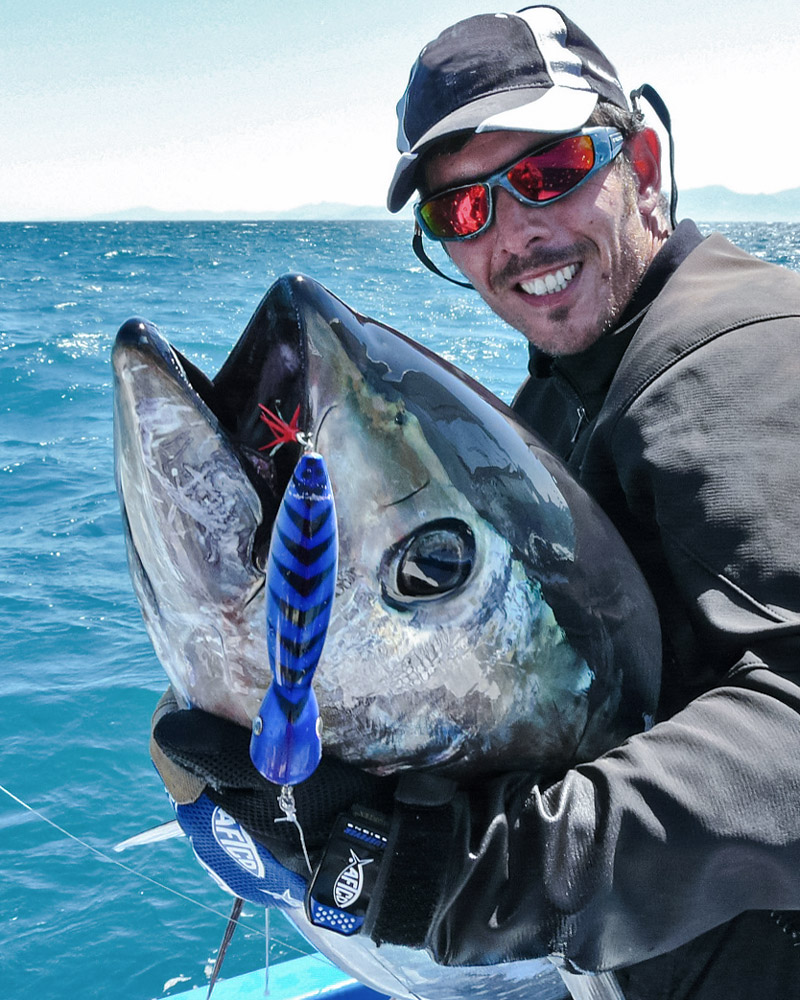
Samuel Elgrishi started Roussillon Fishing in 2011. Samuel’s reputation has spread throughout Europe as a prestigious saltwater fishing guide and people travel far and wide to fish with him. Using different techniques to accommodate all fishermen, he targets many species ranging from his main focus, bluefin tuna, to smaller species such as grouper, snapper, amberjack, barracuda, bass, bonito, mackerel, bream, conger eels and many more. For the public the season for bluefin tuna starts in July and runs all the way through to October. As Samuel is part of the tag and release programme in the Mediterranean it allows him to start fishing in March and end in November. Catch records each week depend on winds, temperature, air pressure, moon phase and so on. If you are a dedicated fly fisher then the best time to go is April to June and September to October.
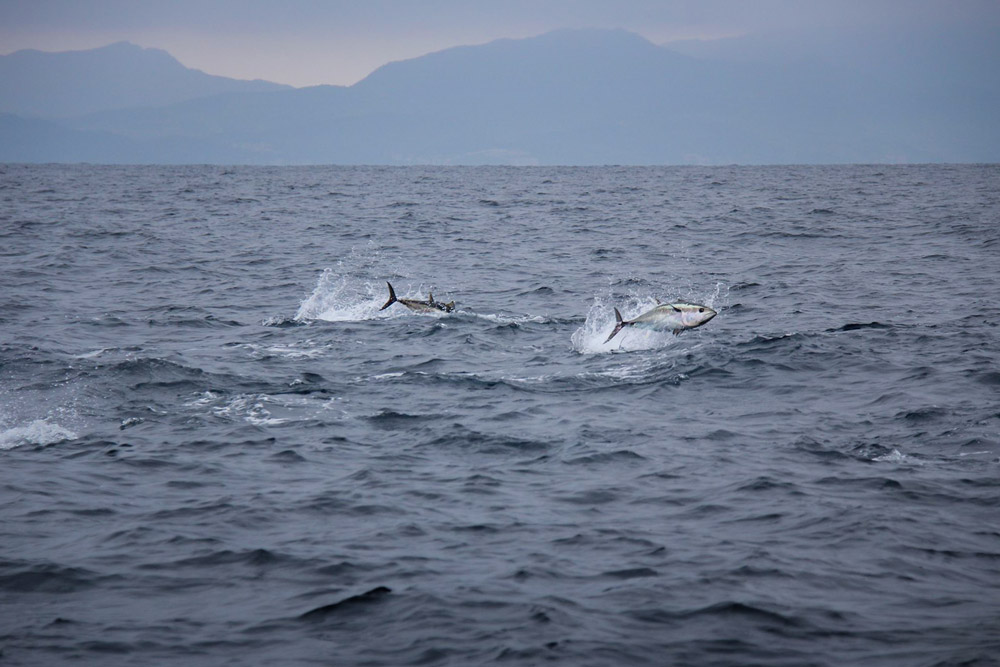
We had a tight schedule with only two days of fishing so the pressure was on from the start! Within half an hour we were seeing an abundance of bluefin surfacing not far from the small port of St. Cyprien where we set off from. Although it felt like our chances were high there was more than meets the eye, as we were yet to discover that we would actually spend the next 8 hours playing a game of cat and mouse with these tuna! Samuel would search high and low, bare-eyed or with binoculars, for diving birds on the horizon and once he spotted them he would drive his boat full speed ahead and decrease the speed slowly as we approached the school of tuna. One bird normally signals one tuna, a flock of birds means game on! The rod has a chance of a handful of casts over the course of a few lively seconds to lure the elusive creatures in. Atlantic bluefin (Thunnus thynnus) are pelagic predators that need to swim continuously in order to ventilate itself and generate enough heat to maintain its vital organs and raise its body temperature above that of the water’s. They are also shy and can dive as far as 900 metres into the deep blue if they think there is a glimpse of danger. If you missed your chance then ‘Tom and Jerry’ would commence. The first day passed us in a flash and we returned to the harbour with no new notches in our belts apart from a new spinning technique known as the Sharapova’s Grunt!


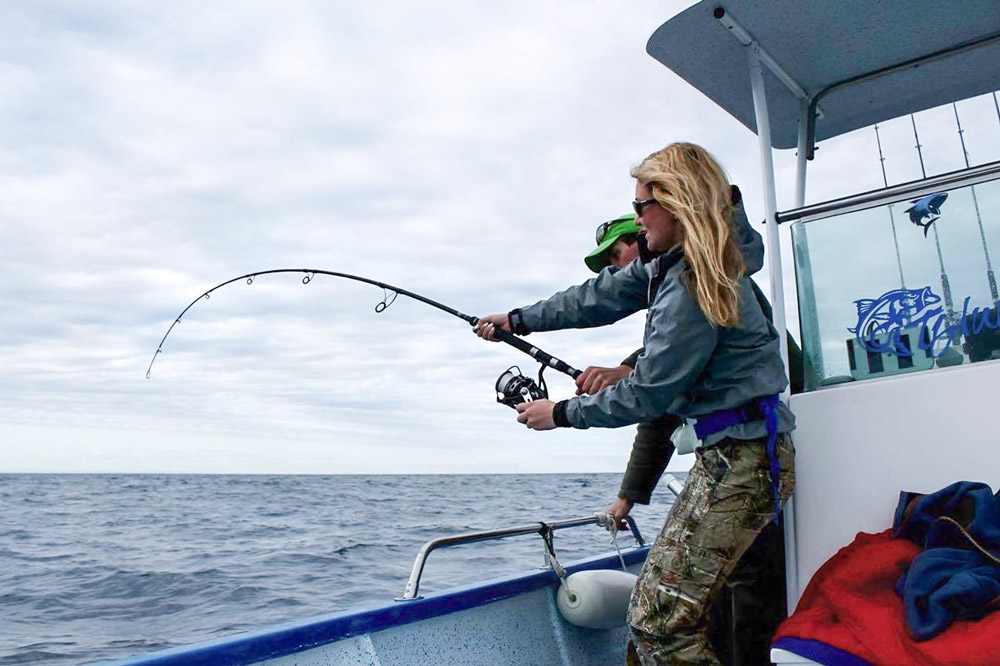
Repeating our tactics on the second day, we came across a small flock of feeding birds who were diving for the bluefin tuna’s prey. Juvenile bluefin hunt in schools and typically hunt smaller baitfish such as mackerel, sardines and herring, along with squid and krill. Their prey mass together for protection whilst they are pushed to the surface and are picked off one by one. We cast into the midst of the havoc before us and retrieved our poppers across the surface. On my first cast I felt a jerk but unfortunately the tuna had missed the lure. As we carried on popping a robotic predator torpedoed into the air and smacked my Pulseon popper with ferocious power – the fight had only just begun! For twenty minutes I was pumping the rod up and reeling in whilst she was drilling me down to my backing, plunging vertically for some two hundred plus metres. I honestly felt like my back was going to snap in half. I must admit that I needed help in the beginning from Samuel and Edd as I feared if I didn’t use one of the muscle-strapped men aboard I would have been flung into the sea with my trophy fish never to be seen again! Together we got her on board and she weighed in at 50kgs (110lbs) and measured 1.4m. I was exhausted but completely spellbound by the magnificent creature.
“For twenty minutes I was pumping the rod up and reeling in whilst she was drilling me down to my backing, plunging vertically for some two hundred plus metres. I honestly felt like my back was going to snap in half”
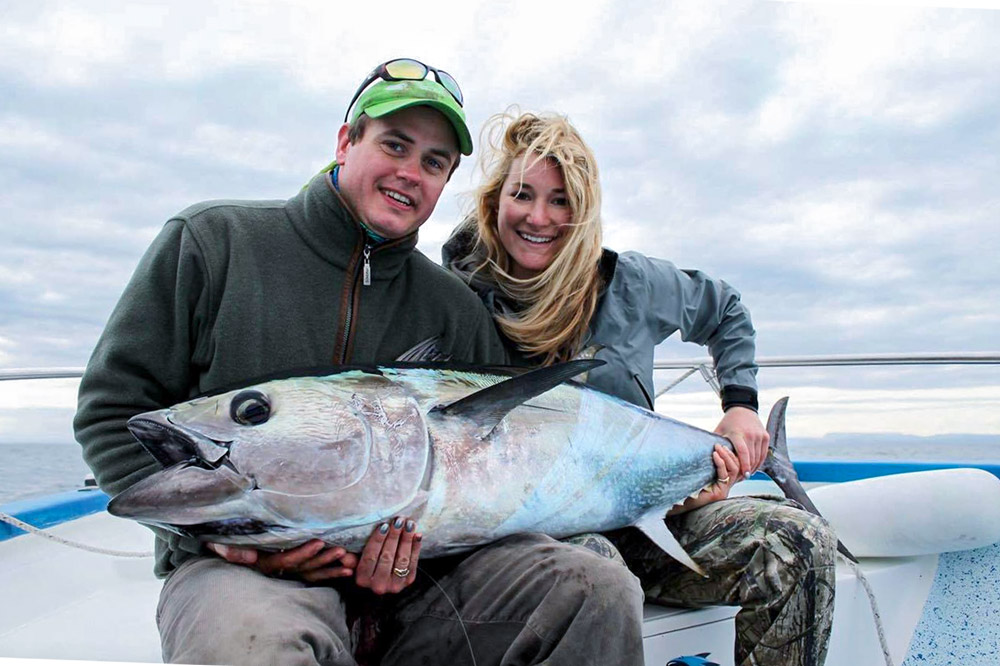
To get an idea of age versus weight and length, a juvenile bluefin would average 1.15m and weigh in at 30kg (66lbs). This fish we landed would have been circa four years old. After holding her and seeing how solid her metal-like body was I wasn’t surprised in the slightest the immense force she had on the other end of the line. We had to release her back as quickly as possible so I didn’t have time to take in all the details, although I did notice how smooth her exterior was and that the dorsal fin had an opening. At a later date I learnt that their dorsal, pelvic and pectoral fins all fit into slots, which helps to reduce drag as they swim at high speeds.
Bluefin tuna are some of the largest and fastest fish in the ocean with an average speed of 44mph. Their streamlined bodies help to conserve energy on their long distance journeys. They are built for endurance and speed and in adulthood, they can measure up to four metres and weigh up to of 700kg (1543lbs). They have been severely overfished throughout the world and many young bluefins are caught before they even have a chance to reproduce. They can live up to thirty years but, due to overfishing, few individuals succeed living that long. Since the early twentieth century, the number of bluefin tuna has been reduced by a shocking 90% worldwide and 97% in the Mediterranean Sea. Samuel, who has been guiding trips for four years educated us on the history of tuna tag and release in France.
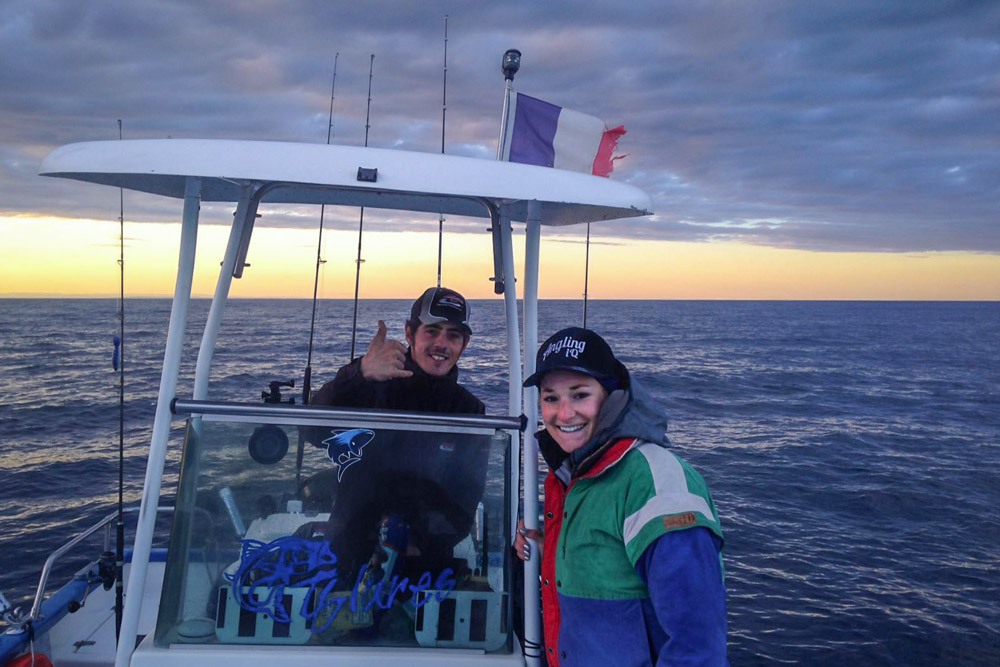
The strict tag and release policy started in 2009 and allows guides like Samuel to run a careful management of tuna stocks coming into the Med. As well as the tag and release programme, each and every fisherman after bluefin for commercial purposes now have to go through a licencing process. Since these regulations have been put in place the bluefin are now on the return and their numbers are increasing every year. Samuel works with scientists in France and further afield to help conserve species such as bluefin, sharks, grouper, whales and dolphins.
Thank you Samuel, it was a great pleasure to be in the presence of a guide who was so unquestionably passionate about the ocean and its future. When our rods were up Samuel would educate us about his surroundings and what lies ahead for our precious world beneath us.
Many thanks for reading,
Marina Gibson <><
 If you would like to book a trip with Samuel Elgrishi please contact him via email: contact@roussillonfishing.com and to find out more about Roussillon Fishing please visit: www.roussillonfishing.com