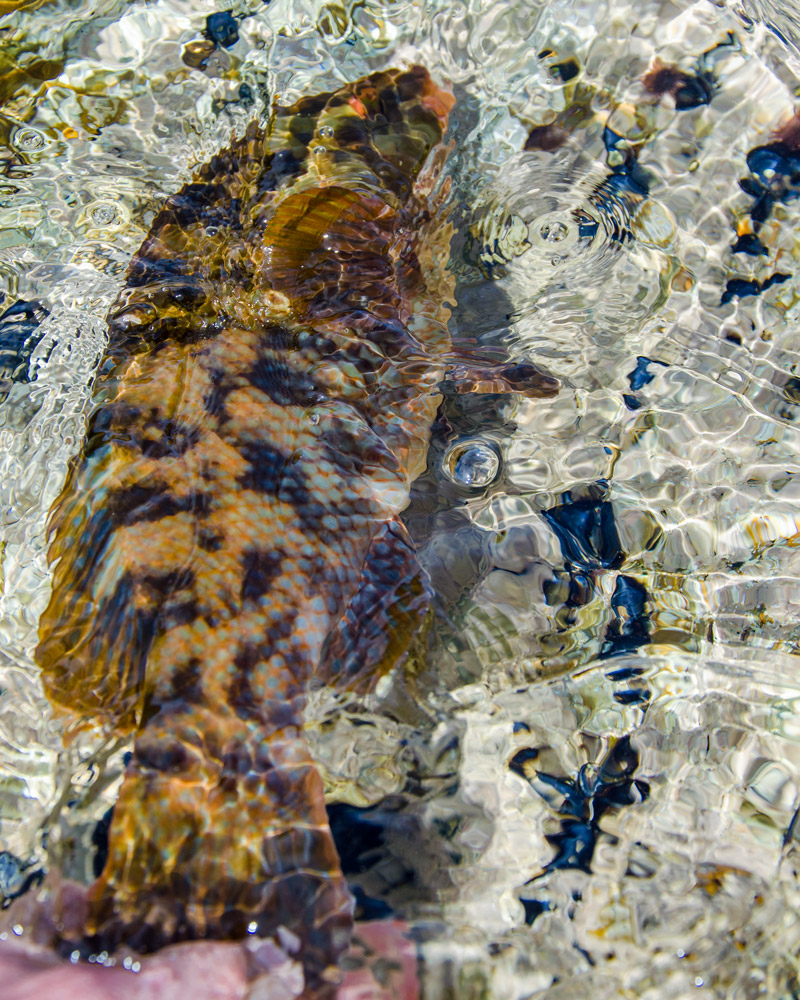
Wrasse revelation
Lure fishing for ballan wrasse
Issue 17 (Jul-Aug 2017) Bill Brazier


Long-term readers of this magazine will have noticed that I don’t write articles very often. Despite the fact that I love writing, I actively choose not to as I feel uncomfortable in putting my own material in the magazine I myself edit. However, I have been asked so many questions publicly and privately about lure fishing for wrasse in the last couple of years that I felt it was about time to put fingers to keyboard and try to help anglers discover this exciting branch of sea angling. These are only my own observations remember, and I am not for one second claiming to be an expert of any sort on this topic, but I have been lucky enough to do an awful lot more wrassing in the last few years than many other anglers out there. Hopefully, this article will help you!
Many of you reading this, even a lot of die-hard shore anglers, will think of wrasse fishing as lowering a small crab or ragworm down into a rocky crevice on the end of a beachcaster or under a heavy float. For sure, these classic tactics do work and as ballan wrasse are such a strong, hard-fighting species, they provide fantastic sport even though the gear is invariably heavy.
My own tentative forays into wrasse fishing off the rocks of the west Clare coast were with the traditional set-up of a 12ft beachcaster, multiplier, 15lb mainline, shock/snag leader and size 1/0 to 3/0 meat hooks holding limpets or small hard backed shore crabs found on route. Leads (or small stones) were tied on, rotten-bottom style and, to me at the time, tactics seemed to be very successful. It was certainly enough to keep this angler happy as I sat perched on cliffs and rocky outcrops, staring into the waves and fizz as they crashed below, feeling for that characteristic “tap, tap” bite as a wrasse viciously attacked the hookbait.
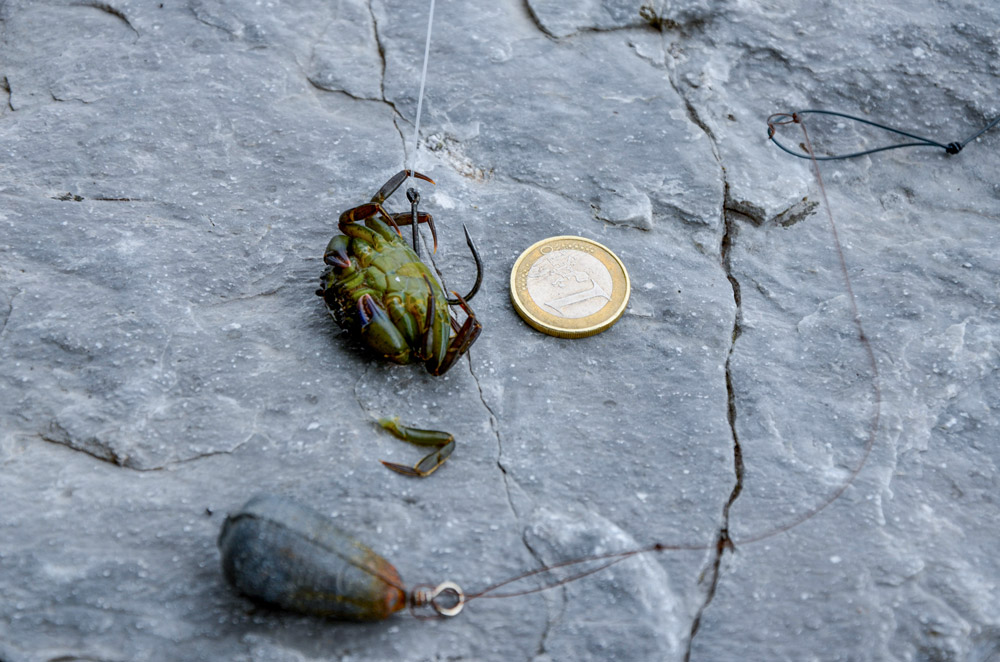
Many fish were landed although many more were lost or bites were simply missed, especially with hardback crabs. The wrasse would smash into the crab and it was a bit hit or miss sometimes to be honest as to whether they would hit the right part and get hooked, or get away with a free meal instead. Ragworm, even lugworm on occasion, brought noticeably more bites on most marks but these also clearly included a smaller stamp of fish. Limpets were useful as bait when nothing else was available but, without doubt, crabs offered the best prospects all-round, consistently tempting the larger wrasse. I recall on several occasions stopping fishing when I ran out of crabs (which often happened!), even though limpets and mussels were available, such was my confidence in them.
Although I lived in and around Cork City for some five years, I admittedly did relatively little wrasse fishing, side-tracked instead by mostly carp and mullet. Then, just over 12 months ago I moved to south Kerry, near the Beara Peninsula, and I suddenly found myself having to adjust my regular target species. I was already in love with wrassing at this point and so the first few ventures were after those. I knew of no specific marks and didn’t really ask either, preferring to just do my own thing and go off exploring. This sense of adventure is maybe why I love wrassing so much.
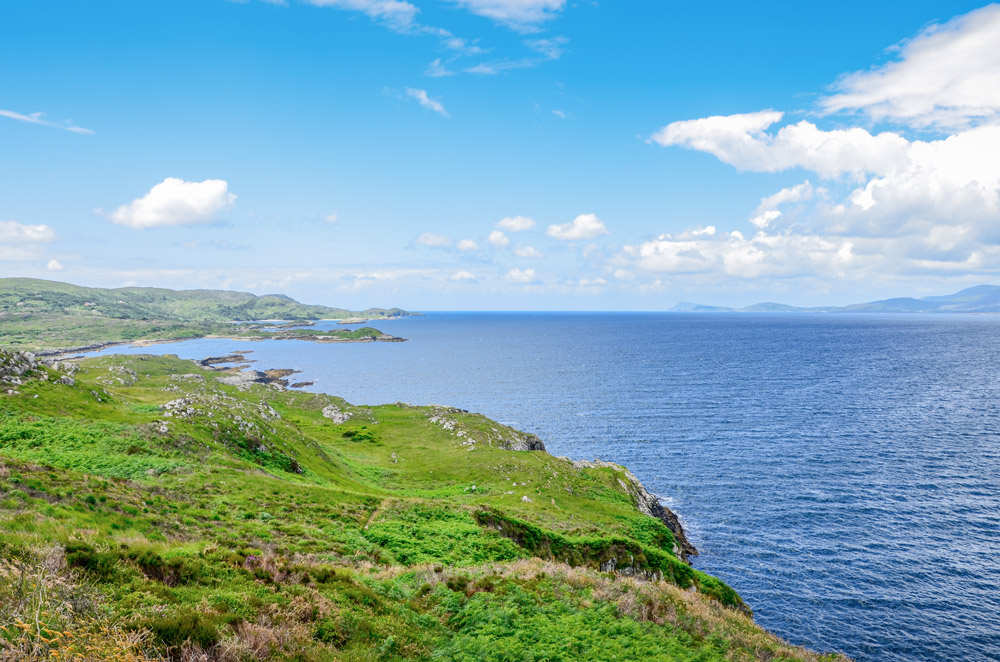
I caught straightaway, from every mark I dropped on to, fishing my usual crab and beachcaster approach. One particular trip, halfway down the Beara, I found a wrasse mark to die for! I remember literally shaking with excitement as I nicked the sharpened meat hook through a crab’s leg socket – I couldn’t wait to drop down the steep side of the small, deep, rocky canyon. Perhaps one of the best things with wrasse fishing is that if they are in residence then it doesn’t take long to get a bite. Unlike practically all other species I have ever fished for, wrasse are extremely obliging the majority of the time. I received the tell-tale rattles on the rod tip almost as soon as the crab neared the seabed and was soon swinging a nice sized wrasse up for its portrait. This was by far the best looking, most promising mark I had found since moving west and I was sure I was going to amass a large number of fish as the tide filled.
Although I did land several more over the next 90 minutes or so (6, I think), and miss easily twice as many bites, it was slower than I had hoped. That may sound greedy to some wrasse fans in other parts of the country or UK, but along the west coast of Ireland you quickly come to expect lots of action. We are truly blessed that this long-lived, slow-growing, late-maturing species has remained relatively untouched by over-fishing in many areas.
I had brought along a lure rod as well on that trip, to try for a pollock or even a stray mackerel or three as dusk approached and the wrasse, inevitably, slowed down. I was soon frustrated at the lack of action on the crab and hopped down to the water’s edge a short distance away from the canyon and switched to lure fishing for whatever came along. It was that very decision that has changed my wrasse fishing beyond recognition.
Lures changed everything…
I had rigged up with a small weedless paddle tail lure, in chartreuse with an orange tail, allowing me to flick it through the kelp and rocks without snagging. On my very first cast, I had a bang that sent my heart and mind racing. “Pollock!” I thought – another superb and underrated sport fish. Second cast, the same thing happened without connecting fully and then on the third cast, on a slower, more intermittent retrieve, I hooked into whatever was harassing my soft plastic. It dove hard for the kelp and visions of a nice 2 or 3lb pollock filled my head. Imagine my surprise then when up popped a red-spotted ballan wrasse! I was delighted, of course but, having never targeted or caught them on lures before, and only read of it being done by the likes of experts like Henry Gilbey or Steven Neely , I was a little perplexed. I took a quick pic with the help of a recovery rockpool and cast again along the edge to see if it was indeed a fluke.
Long story short, in the space of half an hour, I landed over a dozen wrasse on several patterns of small soft plastic, doubling what I had managed on my faithful ledgered crab only yards away. I was surprised and uncertain about exactly why it had happened; maybe the feeding spell had reached its peak for this mark, at that particular stage of the tide? Ever the curious angler, I deliberately stopped chucking lures on two separate occasions and resumed ledgering with fresh, lively crabs. The only result was a few half-hearted plucks and taps. Retrieve my little paddle tail through the same area, at the same depth and the outcome was more stunning wrasse swung to hand. All too soon the tide turned, light levels began to fail, the fish stopped feeding and I retired to the car for some grub of my own. I had already decided on the way back to “rough it” for the night in the car to see if I could repeat the same feat with the lures in the morning. Surely they couldn’t have made that much difference?
“the conclusion was as crystal clear as the waters of the Atlantic that day – lures out-fished bait, hands down!”
The next day was indeed a revelation that I will never forget. Hiking boots on, I explored the area around the new mark with both a lure rod and beachcaster. By the end of a very long, exhausting day, which saw me fish through high tide, through low and to the end of the evening flood, I had received probably 100 hits and managed to land no fewer than 55 wrasse; all but two were caught on lures. And it wasn’t for lack of trying on the crab front either. I even fished with mussels, limpets and super-fresh hard-backs in case something was “wrong” with my supply but the conclusion was as crystal clear as the waters of the Atlantic that day – lures out-fished bait, hands down!
The same pattern has repeated itself in my own fishing ever since that fateful day, to the point where I now no longer really bother with bait fishing, expect on very deep marks. I am convinced that I can usually catch more wrasse on soft plastics and, plus, I enjoy it more anyway. I have seen no bias in lures catching smaller wrasse, which some anglers maintain. Maybe at their marks they’re correct but each and every mark I have wrasse fished, be it in Kerry, Cork or Clare, it is simply not the case. Bait fishing brings about the issues of not only sourcing or buying fresh bait – which with crabs is sometimes very difficult, not to mention expensive – but also the undeniable problem of missing many more bites, as well as covering less ground.
The basic lure set up
Lure fishing is not only great fun due to the lighter gear, but a very cost effective and simple way of fishing, too. Rods should ideally be stiff-tipped (read on to find out why) with lots of backbone. Bass or even salmon spinning rods are a pretty good choice for wrassing, in the 8 to 10ft class. Rod casting weight ratings vary so much from brand to brand, but something like a 10-30 or 40g rating is about ideal. For those without a dedicated rod, I also used a 12ft carp rod for a while and that was more than good enough. The extra length was often a help in landing fish but carp rods are heavy and unbalanced and not meant to be held all day long!
You can of course catch plenty of wrasse on LRF gear but you will lose quite a few as the power simply isn’t in the rod. Ballans are unbelievably strong, even the small ones, and if you give them a single second of a head start they will win almost every time, burying in the kelp or cutting you off on the rocks. They live in very snaggy places and you need to use gear that is up to the job.

As with all lure fishing, you’d be mad not to use modern braids as your mainline. Casting is usually only short distance where wrasse are concerned so you could theoretically use quite heavy braid but I have never found the need to go much over 20lb. A snag leader is essential. Braid isn’t great in its abrasion-resistance qualities when fishing in and around rocks so use a 3-4ft leader behind the lure. Fluorocarbon is the best choice, not for fear of spooking the wrasse but rather as it is tougher than mono. I use 20lb and it is more than adequate for most situations, but be sure to check it regularly for fraying and have spare leaders tied up in your box or bag.
Leaders can be tied directly to the braid via an Albright or FG knot but I often use a strong micro-swivel to join the two materials; it is quicker to replace a leader this way. If you are fishing really treacherous terrain, with lots of rocky crevices then a micro-swivel may cause more snag-ups (literally getting caught in the rocks), in which case opt for a connecting knot instead. Please see how to tie up a basic wrasse lure set up here
You need know only one thing about hook choice for wrasse lure fishing and that is to always use a weedless pattern! Anything else will constantly get snagged and mean you lose an awful lot of gear. It might sound a bit outlandish but hook size can usually be 2/0 or even 3/0, although I have experimented with much smaller sizes with success. Wrasse are, in my experience, not one bit tackle shy and the large hook (relative to their mouth) certainly doesn’t put them off or impede hooking, except on really small fish – which can be a blessing in disguise! A hook of this size is usually thick in the wire and strong enough to lift wrasse out of the water. You could always bring a landing net with you but this is often a hindrance in tidal flows and rips and so most wrassers, myself included, choose to land all fish by hand.
One massively important tip here is to crush the barbs on your weedless hooks. Landing a wrasse is such a hit and hold affair that you are never really going to slacken off enough for the fish to throw a barbless hook. Ballans have seriously tough, rubbery lips and mouths and it makes catch and release so much easier. There really is no need whatsoever for barbed hooks in this case.
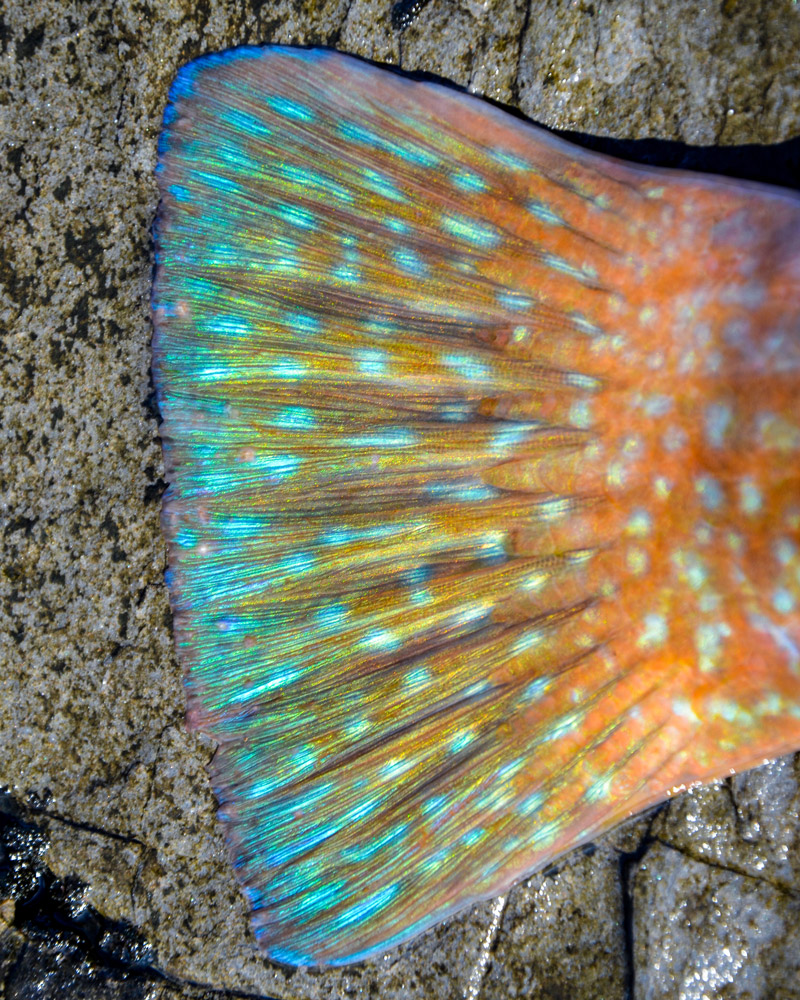
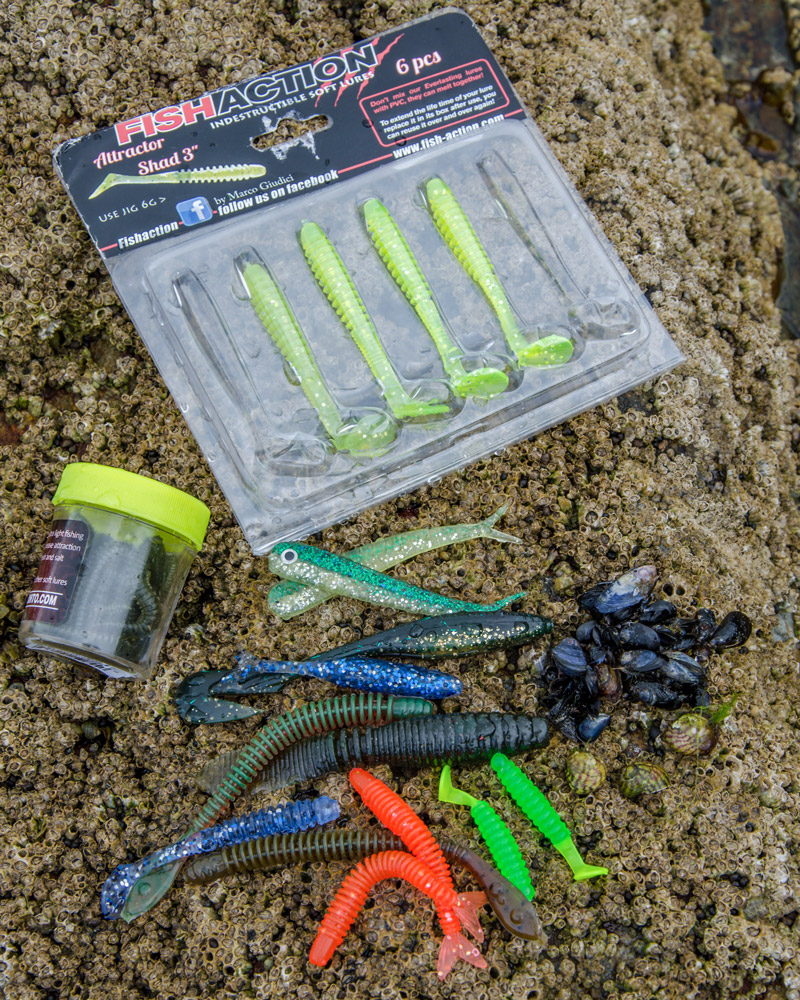
Nowadays, lure choice seems to be the be-all and end-all of many anglers lives. Fortunately, wrasse are highly aggressive and will hit practically anything when in an active mood. Having said that, some patterns do seem to work better than others. Paddle tails are particularly effective, as are creature-type baits. Worm-patterns are winners but expect a noticeable increase in the number of small fish you catch; I guess smaller wrasse feel more confident in attacking a slimmer-profiled lure? I realise I may sound very broad here but that’s the beauty of it; you don’t need the latest all-singing, all-dancing lure to catch wrasse. Believe it or not, twice I have run out of lures, miles from the car, and used tin foil from my sandwiches wrapped around a hook and caught wrasse! As I said, they are not fussy and most soft plastics will invoke a response, so long as they are less than 5” or so. Three-inches seems to be about perfect in my eyes although sometimes you may find you have to go smaller to get regular hits. Ones made of durable, “everlasting” plastics will obviously save you money in the long run. There are thousands of soft plastic options out there but wrasse will quickly destroy many lures, so beware!
Lure colour is always a hot topic and we know so little about how and what certain fish species see that it’s all really a matter of conjecture. All I know is that the wrasse on my marks do not seem to like pure white lures, and that sometimes really bright, gaudy colours get ignored as well. The safest bet appears to be dull colours – browns, greens, blues, blacks – but there are always exceptions and a good lure angler should, of course, always carry a range of colours and not be afraid to experiment.
As the pictures show, lure set ups can be simplicity itself; a hook, a bead and either a cone weight or drilled bullet sliding on the leader/trace are all that is needed. Some anglers use the bead to protect the hook knot, some use them as extra attraction, even using glass beads that make a loud “click” sound as the weight hits it on the retrieve. Honestly, I seem to have equal success both with and without beads, so it’s entirely up to you.

Wrasse musings
What many people don’t know is that ballan (and other) wrasse are diurnal, meaning they are inactive, and basically ‘sleep’, at night . They hunker down in their little hidey hole or crevice and await daybreak. As such, catching noticeably stops as it gets dark, regardless of the tide state, and only picks up again when it becomes light. Wrasse are very much sight feeders, and are highly territorial. It is this territoriality that results in such fantastic lure sport.
It is quite clear to me that ballans are not hunting or feeding on the majority of lures we throw at them, but rather chasing them in an aggressive manner, similar to how salmon act when in freshwater. Whilst wrasse do indeed eat small fish, which most lure patterns loosely mimic, they are not overly common in their diet and they do not actively hunt down small fish as much as bass or other predators. In short, they are chasing the lure out of their patch – a literal “get out of my face!” response – and they use their mouth to attack and fend off intruders. Of course, creature-style baits hopped along the seabed are presumably taken for natural food but paddle tails, fry patterns etc. often don’t resemble anything close to natural prey of a wrasse.
“Wrasse are very much sight feeders, and are highly territorial. It is this territoriality that results in such fantastic lure sport”
Lure retrieve is more important than pattern I think. Too fast and they won’t have time to attack it; too slow and they might ignore it as well. Perhaps they need to feel threatened in order to hit it? A simple “flick, flick, drop” retrieve is normally all that’s needed; cast out, let the lure hit the bottom and then work it back in short but not-too-slow hops. This is where the stiff-tipped rods come into play – a much more effective action can be imparted than with a soft rod. Experiment with your own retrieves and you will soon find the winning method pretty easily. As mentioned above, unlike most other fish, if wrasse are there and are active then they will hit your lure, and that strike is pretty unmistakable!
Wrasse location
Maybe the most important tip concerns where exactly to find wrasse. Of course, they are found all around the coast of Ireland and the UK but some areas contain far, far more and bigger fish. Piers, quay walls and storm-breaks will usually hold small to medium wrasse, regardless of location but for really good sport you need to look to the open coastline.
Most anglers know that wrassing is practiced off rocky marks but it’s not quite as simple as that; it depends on what type of rock mark. Some marks are really deep, straight down into 10, 20 or 30m of water. Ledgering and or heavy float fishing tactics (despite everything I have said above) are the way to go here, although vertical jigging may well work. Most of my wrasse fishing takes place in very shallow water, far shallower than most anglers would even consider fishing in. I’m talking about depths of just a few feet here, where very few other angling species hang out. Though they will happily smash up crabs, whelks, prawns and a whole host of other crustaceans, most wrasse populations along the open coast in my part of the world are evidently mussel feeders. My good friend Tomás ‘Mossie’ Kavanagh pointed this out to me years ago, before I had really got addicted to wrassing. Now it is so obvious a pattern that I can’t believe I didn’t notice it sooner.

Many wrasse you catch will evacuate their bowels as a stress response. In fact, to deal with the pieces of shell that they consume but can’t digest, their rectum actually prolapses (yuk!) to eject the sharp objects, which saves having to force it out and cause damage. You will quickly notice that almost 100% of the material being ejected is that of the blue mussel, Mytilus edulis. So, in short, find rocks covered in mussels, and you will have probably found a decent wrasse mark! It sounds incredibly simply, and I suppose it often is. Obviously not all marks will have rocks covered in mussels. Practically all will be covered in barnacles, though, and will appear as a yellowy-creamy colour. Wrasse do eat these tiny crustaceans but they alone are not enough to sustain a large population or a large fish. Like most angling; find the food and find the fish.
As mussels are filter feeders, they will be positioned along shorelines that receive a strong flow of nutrients on a regular or constant basis, and not in the more inshore, sheltered areas like bays. Even along a given stretch of exposed coastline, you will soon notice some areas have more mussels on them and that is invariably down to the greater flow of nutrients (and algae) in those areas. Wrasse can be incredibly localised to where the best food supply is and it is not unusual to be able to catch 20 or 30 fish from an area the size of your living room.
“So, in short, find rocks covered in mussels, and you will have probably found a decent wrasse mark!”
Wrasse, like all other fish, don’t feed all the time, contrary to what some anglers hope! As with all sea species, they have marked periods of feeding and high activity. This invariably corresponds to the period around the high tides. As many of the wrasse you will be targeting on lures are mainly mussel feeders, it becomes relatively easy to predict when the best times to fish are. Obviously at low water, the mussels are high and dry on the rocks and shallow inshore reefs and not available to the wrasse but as the tide begins to flood and rise again they become accessible. In my experience the wrasse are literally waiting for the first chance they get to burst into incredibly shallow water to gorge on the mussels, and whatever else comes their way. On the bigger (spring) tides, this littoral zone is submerged for longer, and under a greater depth of water and you can expect longer, more intense periods of wrasse activity. This same principle of basing your fishing around the tides applies to other areas such as boulder fields, where wrasse will be feeding on other prey like crabs and limpets as opposed to mainly mussels.

Not only is much of a wrasse’s prey unavailable at low water but it is clear that many wrasse are simply full after their raids at high tide. You can often see and feel the fish’s gut become more and more full of crushed shells on a given mark as the tide progresses, and it seems to me that they then enter a resting/digesting phase between tides. Catching consistently during these periods, at least on shallow marks and on lures, is difficult.
If we know that wrasse do most of their feeding around the high tide, and that they don’t really feed during darkness, then you can almost predict when the really productive days will be. Fish a day when the first high tide coincides with late morning or early afternoon, after a whole night and morning of not feeding, and you can bet those fish will be very hungry and active indeed. Another bonus is that, as primarily a sight feeder, wrasse love really bright, sunny weather – happy days!
“you could probably fish a new wrasse mark every day for the rest of your life and hardly see another angler…”
I apologise for the length of this article but I hope the above has helped you and that get out and give lure fishing for wrasse a go. I have tried to cover everything I think you need to know but again bear in mind these are only my own observations and thoughts and you may experience something totally different. Wrasse are certainly not a difficult species to catch. In fact, the real challenge often lies in fishing your way through to some larger fish, which I think most will quite happily do!
Here in Ireland we are so lucky to have hundreds upon hundreds of miles of stunning coastline, some almost untouched and unfished. Along the west coast at least, you could probably fish a new wrasse mark every day for the rest of your life and hardly see another angler, which is something that really appeals to me. Scenery, tranquillity, lots of beautiful, hard fighting fish – believe me, it is highly addictive!
Be safe and enjoy it,
Bill Brazier