
How to set up a weedless Texas rig for ballan wrasse
Issue 17 (Jul-Aug 2017) Bill Brazier


Ballan wrasse are a very obliging species that be caught using many methods and baits. Lure fishing, however, has changed how many anglers approach and think about this hard fighting species. Not only incredibly simple and effective, targeting wrasse on soft plastics with a texas rig is also great fun. If you haven’t given it a go yet, you need to ASAP!
Although they can be caught all year round, the main wrasse season across Ireland and the UK is April to October.
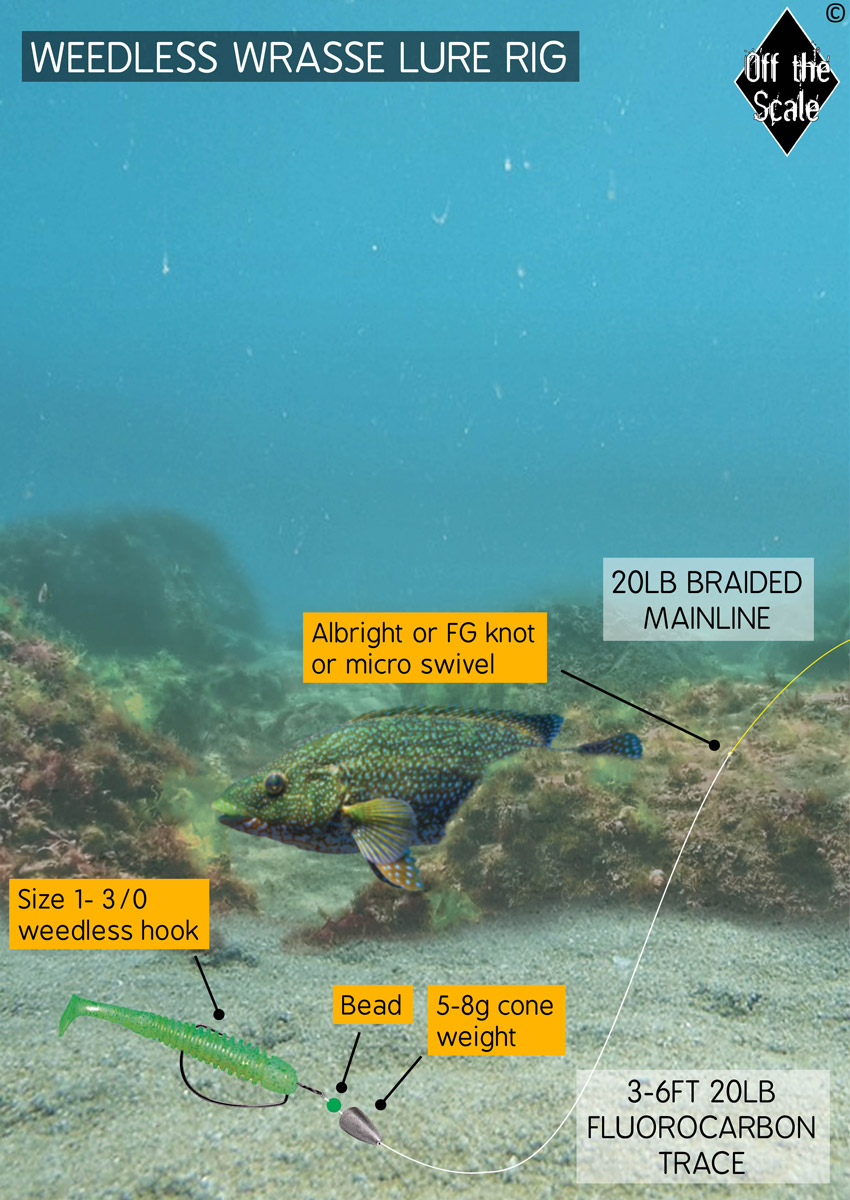
- Tackle is simple; a medium spinning rod of some description (8-10ft, 10-30g is perfect), a small reel loaded with 20lb braid, a fluorocarbon trace, a sliding weight and a hook is all you need! Light carp rods will also suffice if needs be.
- Lure pattern and colour is entirely up to you but wrasse seem to prefer attacking dull colours. Opt for soft plastics in the 2-5” size range and you won’t go far wrong. Don’t be afraid to change both size and colours if action is slow.
- Weedless (aka offset, worm, Texas) hooks are a MUST! This allows you to fish right into the rocks and weed where the wrasse live and not lose your gear on every cast! Nicking the point of the hook back into the lure is a good tip to fish 100% weedlessly – it won’t impede hooking at all.
- Braided mainline is also a must. Join it to your fluorocarbon trace with an Albright or FG knot, or if you don’t like tying those knots then you can use a micro swivel instead.
- Cast out your lure, let it sink to the bottom and retrieve it in short hops and flicks. Usually a slow retrieve is best. Don’t be afraid to fish into incredibly shallow water, incredibly close in – this is where many wrasse will wait for food to be washed off the rocks by wave action.
- And finally, worry more about where and at what stage of the tide you are fishing rather than your set up. As you can see, it’s hardly complicated. Along the open coast you are typically looking to target areas with lots of mussels and other crustaceans around high tide.
- Although coldwater wrassing is possible, wrasse fishing on lures is best in the warmer months, when they are far more active and aggressive.